Category Archives: Places

VM_365 Day 264 Cropmarks record ancient Ramsgate landscape

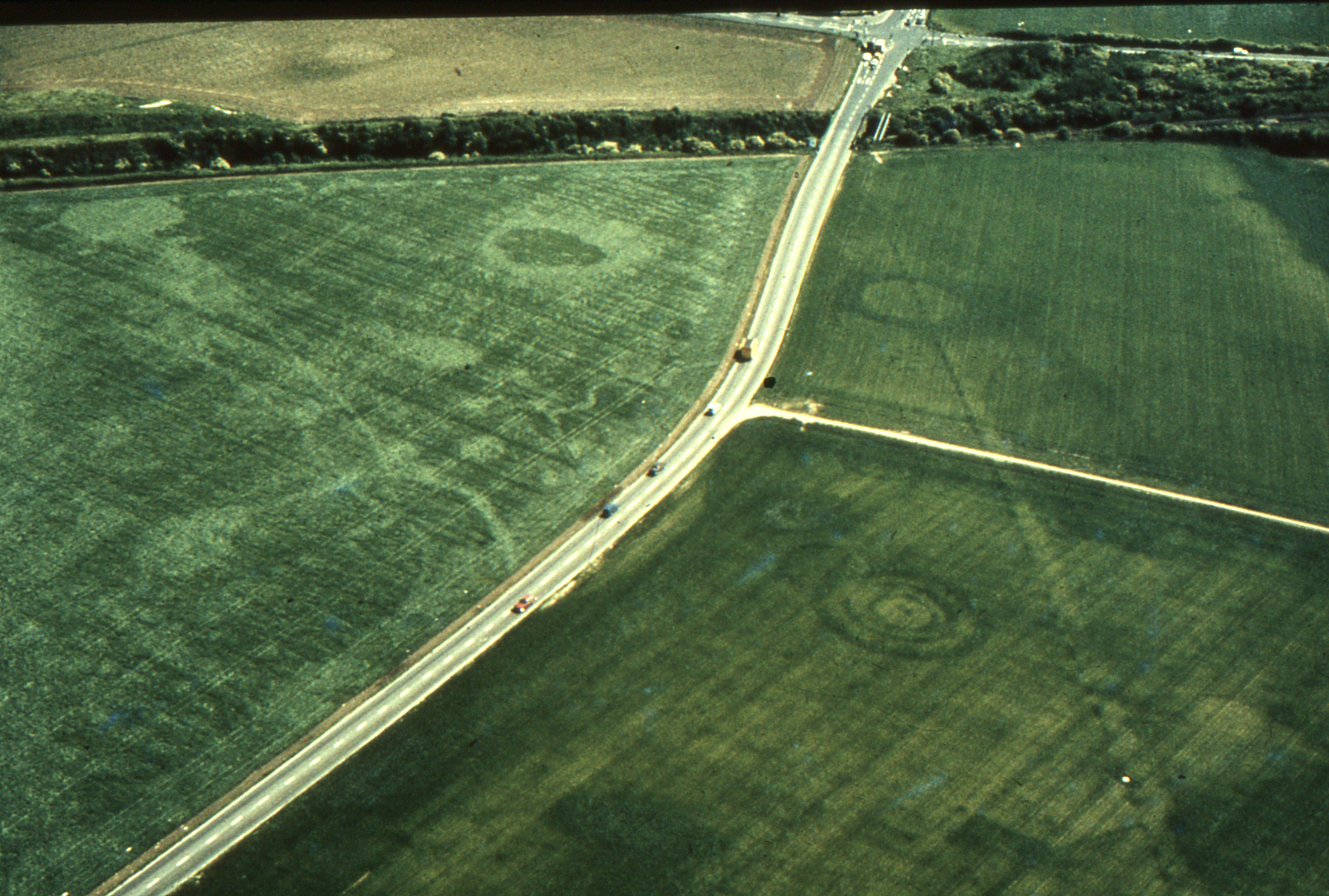
VM 264Today’s image for Day 264 of the VM_365 project shows an aerial photograph of one of the most impressive groups of crop mark groups in Thanet’s historic landscape. The picture was taken in the the late 1970’s, from an aeroplane flying over the downland ridge at Lord of the Manor, Ramsgate overlooking Pegwell Bay.

In the photograph, which is facing south east toward Ramsgate, a chalk ridge extends from the lower right corner of the picture toward the top left. The ridge is isolated by the dry valleys that flank it on the right and left hand sides, affording spectacular views over the coastline to the south .

The overflight to photograph the cropmarks took place before several major developments in the road network in the immediate area took place, preserving a record of the  landscape despite the considerable changes  that have happened in recent years. The linear markings and circular shapes that can be seen through the variations in the colour of the crops growing in the field, indicate the locations of buried archaeological features and sites, which have been investigated in many phases of archaeological investigations that were guided by the location of the crop marks since the photograph was taken. The effect of buried archaeological sites  which produced the variations in colour in the growing crop was explained in a drawing produced by Dave Perkins in our VM_365 post for Day 252.

At the junction between a road and a railway cutting that can be seen at the top right of the picture, one of the earliest published archaeological investigations was conducted by William Rolfe, Thomas Wright and Charles Roach Smith, when an Anglo-Saxon cemetery was disturbed by the railway cutting in 1846.  A drawing made of one of the graves was shown on VM_365 Day 225. The Saxon cemetery and the more ancient Bronze Age ring ditches that had occupied the ridge, continued to be investigated in several stages in the later 20th century.  Images of some of the excavations of the Anglo-Saxon cemetery that were carried out in the 1980’s were shown in the VM_365 posts for Day 216 and Day 217.

The three concentric ring ditches of a multi-phase monument, which was first constructed in the Neolithic period and was renewed in the Beaker and Bronze Age periods, can be seen in the bottom right part of the image. A view of the partial excavation of the three ring ditches in 1976 was shown in the image for Day_21.

Archaeological work in this landscape has continued to be carried out with the ditches of an Iron Age settlement being explored in 2012 and in a  training excavation carried out as recently at 2013.
 

VM_365 Day 263 Crampton’s Water Reservoir for Broadstairs

VM 263

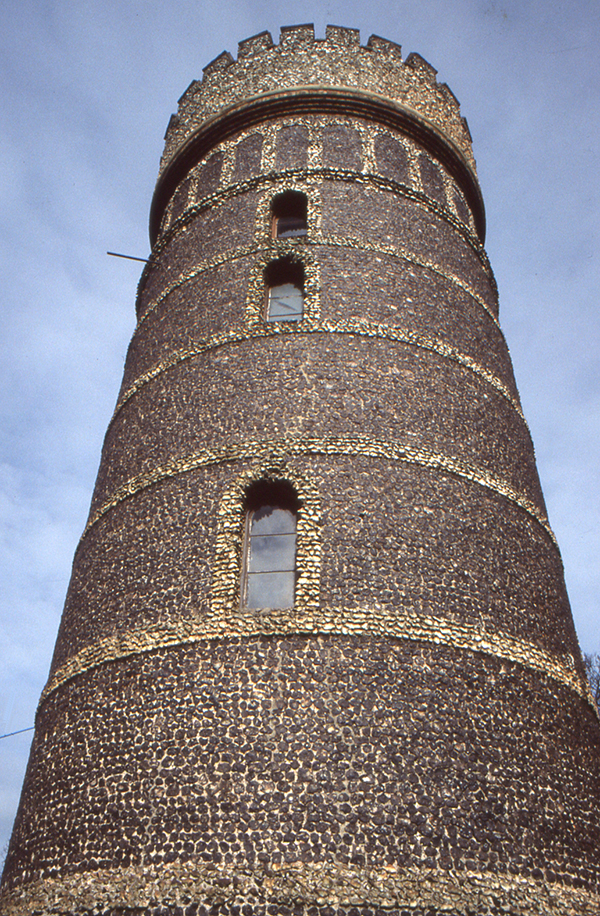
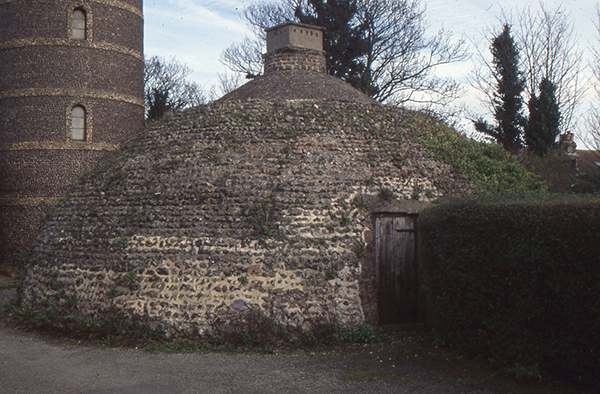
Today’s post for  VM_365  Day 263 shows the disused reservoir located next to Crampton Tower, Broadstairs which was featured in yesterday’s VM_365 post.

The reservoir formed part of the Broadstairs waterworks built by Thomas Crampton in 1859.  Water was drawn from a deep well sunk into the chalk and was stored in the large reservoir covered by this impressive flint and mortar dome. The reservoir had a capacity of 380000 litres and water was pumped by a gas operated engine to a storage tank at the top of Crampton Tower, where gravity created enough water pressure to supply houses nearby.

The dome of the reservoir measures 8.8 metres (29 ft) in diameter and 5.4 metres (18 ft) high. It is constructed of brick inside and flint and daub on the outside of the dome although the upper part is constructed of brick with a chimney. On top of the chimney is a square ventilation box. Like Crampton’s Tower, the reservoir is Grade II listed and together they form a landmark in Thanet’s urban engineering heritage.

For more information about Thomas Crampton and Crampton Tower, visit Crampton Tower Museum in Broadstairs.

VM_365 Day 262 Broadstairs industrial archaeology landmark

VM 262The image for Day 262 of the VM_365 project is of one of the landmarks of Thanet’s industrial archaeological heritage, Crampton Tower at Broadstairs. The tower stands three stories high (24.38m) and is faced with flint, the ubiquitous building material of the small towns and villages close to the sea in Thanet. The divisions between the stories and the windows and doors are picked out with rough flint dressings and string courses. The tower and reservoir are Grade II listed.
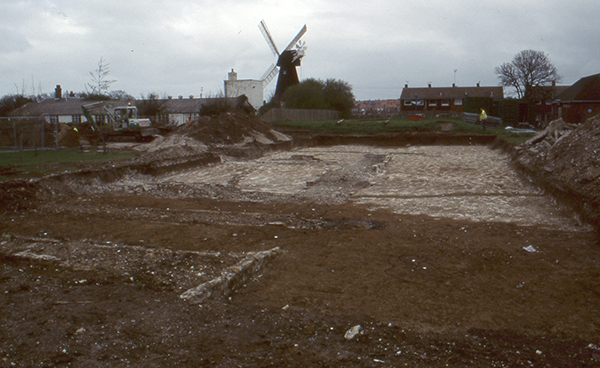
The tower was built  to improve the supply of fresh drinking water to Broadstairs and was designed and largely funded by the English civil engineer Thomas Crampton (1816 – 1888),  a railway engineer of great ability, who among many achievements was responsible for a locomotive design, which enjoyed particular success on the continent.

Crampton was born in Broadstairs, the son of a plumber and architect. His parents managed or owned therapeutic baths at Eldon Place, Broadstairs whose warm showers were notably enjoyed by Charles Dickens. Thomas Crampton had been involved in the construction of the Berlin Water works in 1855 and formed the Broadstairs Water Company in 1859.

In the Broadstairs Water Works designed by Thomas Crampton, water drawn from a deep well sunk into the chalk was stored in a large reservoir holding 380000 litres, which was covered by an impressive flint and mortar dome. A gas operated engine, which possibly survives in the tower floor, pumped the water from the reservoir to a tank at the top of the tower, where gravity created sufficient water pressure to supply houses in the nearby area.

Crampton’s water tower is one of the significant steps in the development of Broadstairs  from a cluster of fishermen’s cottages and boat building yards into a small town with the modern conveniences that were expected by visitors to the area and its growing population in the 19th century.

For more information about Thomas Crampton and Crampton Tower, visit Crampton Tower Museum in Broadstairs.

VM_365 Day 261 Two sides to Archaeology at Drapers Mills Margate

VM 261The image for Day 261 of the VM_365 project shows two aspects of the archaeology of Drapers Mills, Margate, both from very different periods but occupying the same landscape.
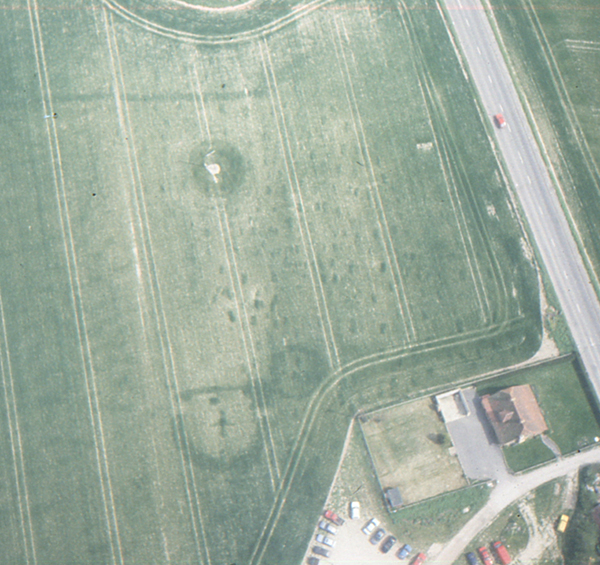
In the foreground of the image the excavation of a Late Iron Age or Early Roman enclosure is taking place on the playing field of a school. The ditched enclosure is located on the periphery of the site of a Romano-British villa, which was disturbed by the construction of the school in the 1930’s and investigated by excavations between 1959 and 1961 and again in 1981.  The villa probably replaced a small Iron Age settlement, which lay within the enclosure ditch. A filled in chalk quarry from the Roman period in the 2nd century AD, located near the houses to the right of the mill in the image, produced the cast bronze head of a boxer which appeared in the image for Day 17 of the VM_365 project. A wooden box storing a collection of the samian pottery from the villa excavations of 1959 to 1961 in the same area featured in VM_365 Day 86.

In the background at the centre of the image is Draper’s Mill, a smock mill constructed in 1845 by the Canterbury millwright John Holman. A smock mill has a sloping body, with a cap at the top that rotates so that the sails can be turned to face the wind. The windmill is the last survivor of three mid 19th century windmills that that once stood together on this rounded downland hilltop. Draper’s Mill was threatened with demolition in 1965, but was saved and restored in 1968.

Early maps show windmills occupying the hilltop near Drapers Mill as early as the 17th century, and it is likely that there were earlier post mills near the site in the medieval period, standing on similar trestle platforms and possibly within circular enclosures,  to those at St. Peters and Sarre that were shown on VM_365 Day 259 and Day 260. The hilltop site overlooking the bay at Margate has been occupied for many thousands of years and its history is written in the archaeological record, both above and below ground.

VM_365 Day 260 Cropmark of Medieval Post-Mill at Sarre

VM 260

Today’s image for Day 260 of the VM_365 project shows cropmarks  at Sarre recorded during an aerial reconnaissance flight by the Trust for Thanet Archaeology in 1990.

The cropmarks, located to the east of the existing Sarre Mill, show an Anglo Saxon cemetery in the north east quadrant of the picture and a medieval post-mill foundation showing as a ring ditch with a cross in the centre in the south west quadrant.

Evaluation trenching by the Trust in 1990 sampled a number of the Anglo Saxon graves which have previously featured in VM_365 posts and also sampled the cropmark of the post-mill.

The Sarre post-mill is of similar form to the post-mill that was excavated at St Peters, Broadstairs. The ring ditch and cross trench at Sarre contained pottery in 13th and 14th century fabrics indicating that a windmill has stood at Sarre from at least the 13th century.

VM_365 Day 251 Medieval Well Shaft at Cliffsend

VM 251

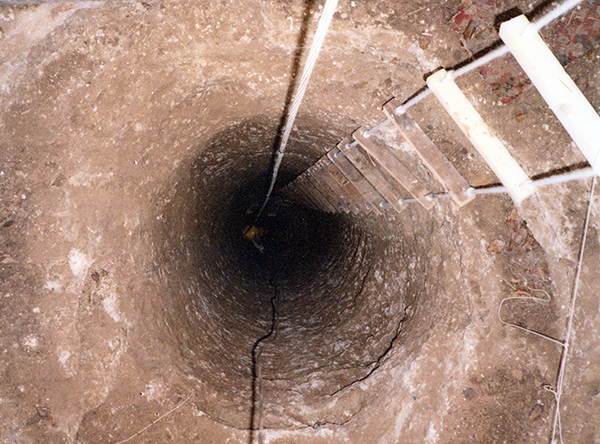
Today’s image for Day 251 of the VM_365 project shows a Medieval well shaft under excavation at Little Cliffsend Farm between 1985 and 1987.

The well head, which was lined with sandstone boulders, was discovered in 1985 when a large hole opened up in the fields above the cliff top overlooking Pegwell Bay.  The hole had been caused by the soils filling the well shaft collapsing into an open void lower down.

The backfill of the shaft was excavated by members of the Thanet Archaeological Unit under the direction of Dave Perkins and Len Jay, to a depth of more than 16 metres before the water table was reached and it had to be abandoned. If you look closely at the base of the shaft you can see the yellow hard hat of one of the excavators.

The well, dated by pottery sherds to the 14th century, was cut into the solid chalk bedrock and featured handholds in the sides, presumably cut to allow the original excavator of the well to enter and exit more easily. Similar well shafts have been exposed in the cliff face at Pegwell Bay nearby.


VM_365 Day 249 Manston Beaker burial under excavation

VM 249

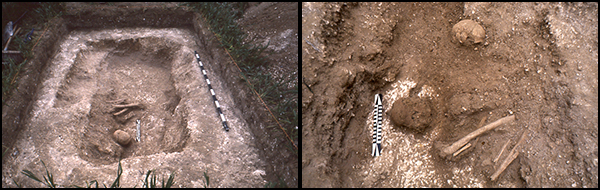
Today’s image for Day 249 of VM_365 shows the Manston Beaker burial under excavation in 1987.

The burial was contained within a grave located centrally within a roughly oval shaped barrow. The crouched skeleton of a slightly built young adult was accompanied by a long-necked beaker, a flint knife and a jet button. The picture on the right hand side shows the burial during excavation with the beaker on the left side of the pelvis.

A secondary crouched burial had also been inserted on the inner edge of the ring ditch to the south of the central grave.

The central grave had apparently been disturbed, possibly by a later burial  inserted into the barrow mound, maybe during the Anglo Saxon period, as parts of the skull were missing and a fragment of femur unrelated to this skeleton was found in the backfill above.

Radiocarbon dating carried out on the right femur of the skeleton dates the burial to 1680±50 bc (2132-1922 years BC) which places it at the beginning of the early Bronze Age.

VM_365 Day 248 What did the Minster Roman villa look like?

VM 248

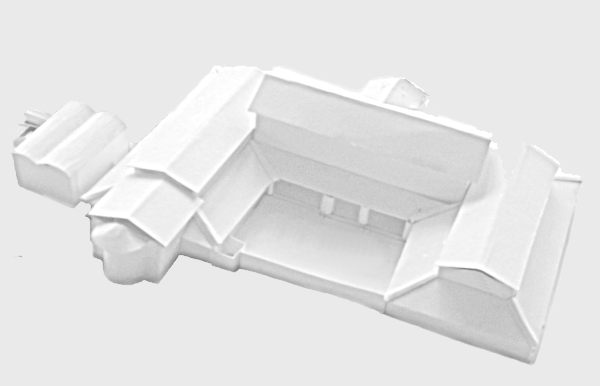
The image for Day 248 of the VM_365 project is a reconstruction of the main winged villa building at Minster in Thanet. The image is based on an architectural model of the building, based on the ground plan traced from the truncated foundations revealed in the series of excavations sponsored by the Kent Archaeological Society.   The building is viewed from the south east, across the central courtyard toward the north west corner of the building.

Although the two wings and the central range of the villa appear to be symmetrical, the east wing stands slightly further to the north than the western wing. To compensate for the offset and to link the two wings, the  central range was slightly slanted,  each room being slightly trapezoidal in plan rather than rectangular.

At some point an extension had been added to the southern end of the west wing,  adding an apse and and an L shaped tunnel to form an access from the outside to a furnace. This extension may have been a heated dining room.

Corridors on the front, sides and rear of the wings and on the rear of the main range, provided access to the series of rooms within each building range. The structural evidence indicates that screen walls blocked some of the corridors creating specific routes around the building.

The central range of buildings are fronted with a corridor and portico, linked to corridors attached to the east and west wings, covering three sides of the central yard with a roof. The yard was enclosed at some point with a screen wall at the southern end, with a gatehouse or buttress located on a square  foundation at the western end of the wall.

Part of the roof covering the heated apse attached to the north side of the  central building in the east west range can just be seen to the rear of the building. The corridors to the rear of the east west range provided access from the east and west sides into the central hall with its heated niche at the northern end.

On the western side of the winged villa, the roof of the detached  bathhouse is conjecturally reconstructed with a pair of barrel vaulted roofs covering the various baths and heated rooms.

One of the elements that the reconstruction does not reproduce are the various chimneys and flues that would have allowed the smoke from domestic heathers, heated rooms and bathouses to escape from the roof-line of the building. Perhaps this would have given the villa a more industrial appearance than the usual bucolic views that are given in similar reconstructions of similar Roman villas.

VM_365 Day 247 More bath houses and buildings at Minster Roman Villa

VM 247

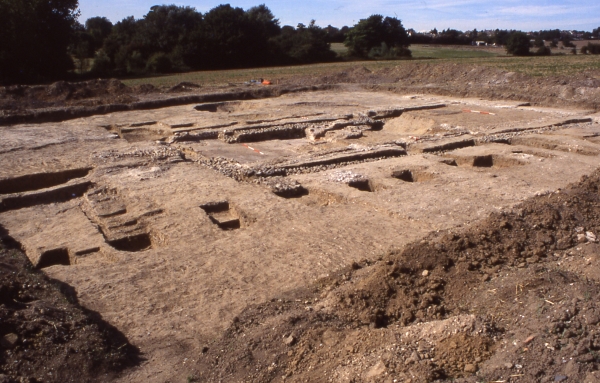
Day 247 of the VM_365 project is our penultimate post on the series of images of the main buildings of the Roman Villa at Minster in Thanet, a view facing north west across a building located at the south west corner of the villa complex.

The post for VM_365 Day 246 featured a two roomed corridor house, Building 4,  added to the south eastern corner of the boundary wall surrounding the main winged villa building.  The image today shows the foundations of a similar two chambered structure that had been added to the outside of the south west corner (Building 6).

The excavation of building 6 revealed a more complex story where at least three phases of structure were traced in the same area.  The original two roomed building that had been added to the south west corner of the boundary wall was similar in plan and construction to the core of Building 6. However, soon after it was built it was converted into a bath house through the addition of extra rooms and a furnace feeding a hypocaust. As the villa had a detached bathhouse within the western side of the walled compound, it is not clear whether the two bath houses were operated at the same time.

Small finds from the bath house excavation included copper alloy toilet sets for personal grooming and several of the bone pins that were found during the excavation were recovered form this area.

Later still the extra buildings of the bathhouse were removed and the furnace and hypocaust were backfilled with debris. The two chambered structure was restoredmon a new set of foundations.

Behind the building at the far end of the trench, a circular pit can be seen in the image. The pit was the upper cut of a deep well, sunk into the crest of the valley beyond, which may have supplied water to the bath house adapted from the two room building. The fills of the well contained large quantities of broken pottery and some more delicate finds such as the leaf shaped pendants shown in the post for VM_365 Day 31.

The complex  series of construction, conversion and replacement demonstrated how a major building like the Minster villa was frequently altered and adapted to suit the present needs of the two or three generations of people who may have occupied it, despite its relatively short life and eventual demolition in the Roman period.

VM_365 Day 246 Corridor House in Minster Roman villa complex

VM 246

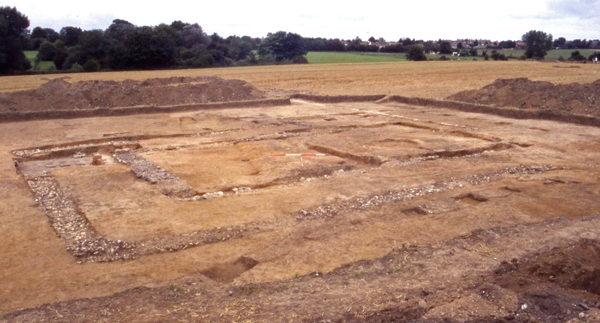
The image for Day 246 of the VM_365 project shows a  north west facing view across another of the elements of the Minster Roman villa complex, a small corridor house (Building 4). This structure stood approximately 80 metres to the south of the main villa, immediately outside the south east corner of the wall surrounding the winged villa building.  The building was placed on the southern limit of the plateau occupied by the villa and its boundary wall and outer structures. Along the top of the picture the break of slope of the plateau, leading to a valley on its western edge, is visible.  The detached  bath house shown in the post for Day_245 had been placed on this crest so its drains could discharge into the valley. The location of the bathouse in this image is approximately in line with the gap at the right hand end of the row of trees at the base of the valley.

Several phases of construction could be identified from the foundations of the structure at the southern corner of the villa compound. In the first stage a rectangular building, which was  divided into two square rooms by a central wall, had been  erected on the south side of the boundary, using the wall as the northern gable. The rectangular building was surrounded on the south, east and west sides by a narrow corridor. The small hypocausted room, which was featured in the VM_365 post for Day 243, was inserted into the south western corner of the corridor. Later the northern end of the corridor was widened and extended northwards beyond the original line of the boundary wall, which had presumably been removed.

Much of the building had been robbed of usable materials when it was abandoned in the Roman period.  The pottery recovered from the buildings suggests that it was constructed soon after the mid 2nd century, abandoned by the mid 3rd century and robbed of its building materials in the late 3rd or 4th century.  Intensive ploughing had also reduced much of the surviving structure and only the sub floor of the small hypocausted room survived because it stood in a rectangular cutting that extended to a depth below the  level of the wall foundations.

The trenches cut to remove the building materials were backfilled with soil,  fragments of  Roman brick and tile and loose flint cobbles, which had not been collected to be used again. Fragments of crushed mortar and small pieces of painted wall plaster in the trenches probably derived from the building, indicated that the small building was finished and decorated to a similar standard to the main range of the villa, suggesting it was a small detached house rather than a service building.