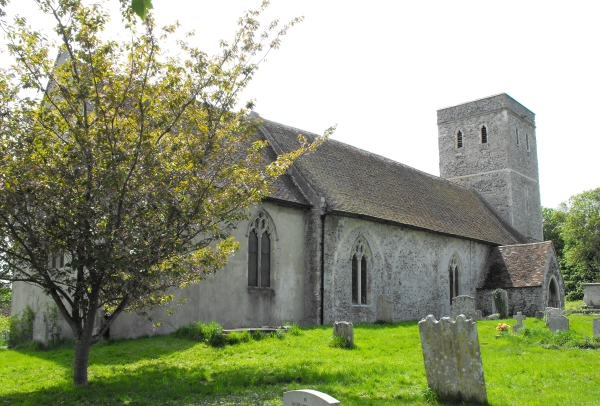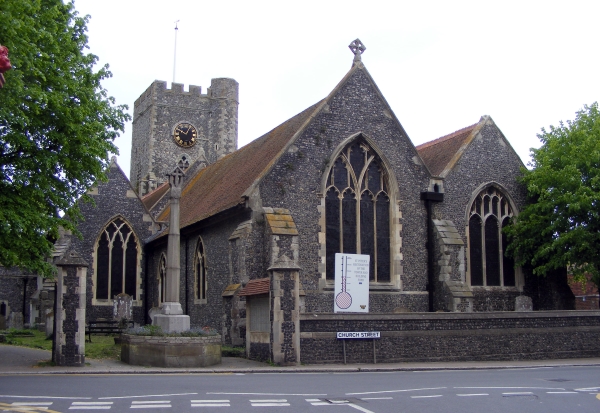
Today’s image for Day 325 of the VM_365 project shows the parish church of St Peter the Apostle which is located in the vilage of St Peter’s, Broadstairs. Like the parish church of St John the Baptist, Margate which featured on Day 324 of the VM_365 project, this was originally a chapel to the mother church at Minster before becoming a parish church in its own right in the 13th century.
This church was constructed in the 12th century and was originally much smaller consisting of a chancel, nave and a south aisle with at least two bays. The original Norman arcade of mid 12th century date still survives. The church was extended with the addition of a north and south aisle in the late 12th century. The existing north chancel arcade may be of early 13th century date.
In the 14th century the Norman aisles were widened and the north west tower with its crenellations and gargoyles was added in the early 15th century.
Interestingly the church tower was used as a signalling station in Napoleonic times due to its then highly visible location and it still has the right to fly the White Ensign.
Like our other parish churches on Thanet, this church was heavily restored in the mid 19th century.
References/Further Reading
Berg, M. and Jones, H. 2009. Norman Churches in the Canterbury Diocese. The History Press.
Historic England 2015. The National Heritage List for Britain: The Parish Church of St Peter the Apostle. List entry no. 1273791. http://list.historicengland.org.uk/resultsingle.aspx?uid=1273791&searchtype=mapsearch
St Peter in Thanet. 2015. A Brief History of the Church. http://www.stpeterinthanet.org.uk/aboutus.htm
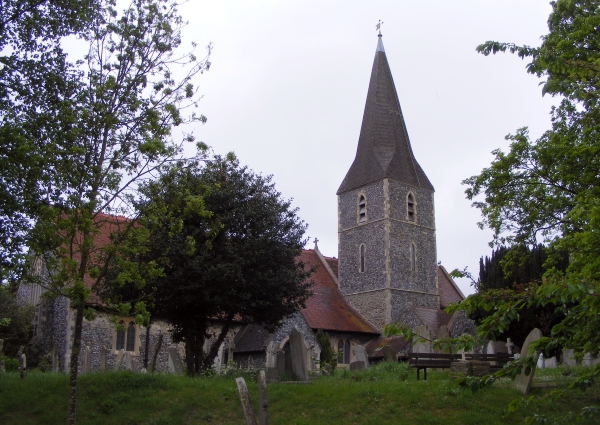
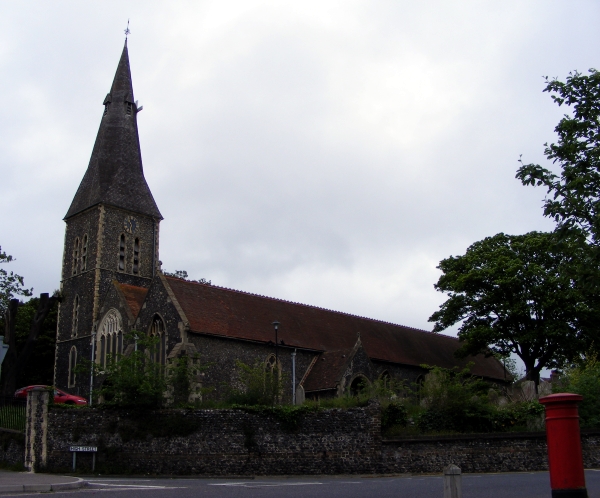 Today’s image for Day 324 of the VM_365 project shows the large parish church of St John the Baptist, Margate. It is located on high ground about a mile inland from the coast and would have been widely visible throughout the parish before the town became more built up in the 19th and 20th centuries. The church was constructed mainly in knapped flint with some ragstone used later.
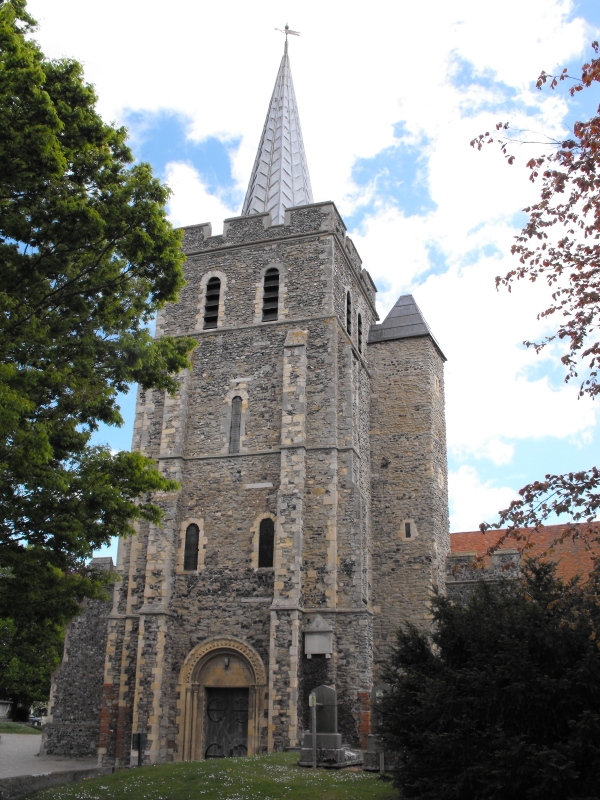
 The image for Day 323 of the VM_365 project shows the parish church of All Saints, Birchington. The church is located on high ground approximatley 1.2 km (¾ mile) from the coast and although now heavily built up, the landscape would have been open all the way down to the sea until around the mid 19th century. The churchyard is large and open and has been terraced along the hillside to accomodate the 19th century extension to the graveyard.
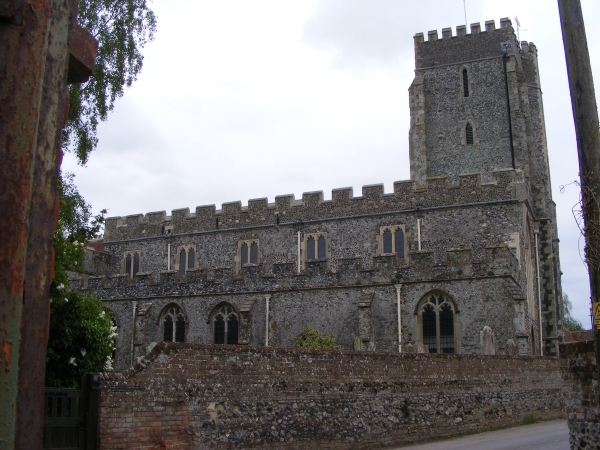
 The image for Day 322 of the VM_365 project shows the eastern end of the church of St Mary the Virgin, Minster in Thanet. The church was constructed with a mixture of water rounded flints and Thanet beds sandstone, with Caen stone , Reigate stone and Ragstone used as dressings in the medieval period. Bathstone was used to construct some of the 19th century elements.
 Today’s image for Day 321 of the VM_365 project shows another of our standing archaeological remain, this time the church of St Nicholas, St Nicholas-at-Wade, near Birchington. The earliest church at St Nicholas was built in the late 11th century and parts of it survive in the lower portions of the west wall of the nave. The original church was constructed of large flints and sandstone from the Thanet Beds.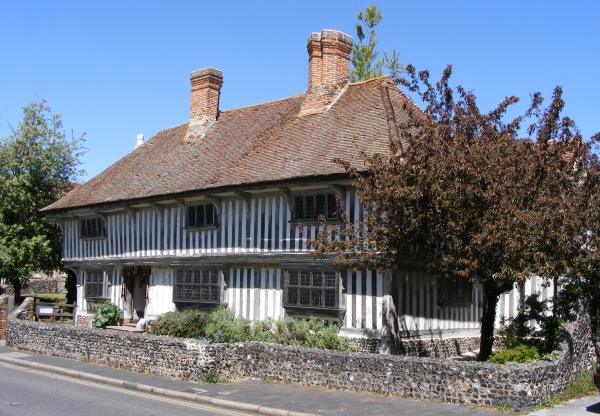
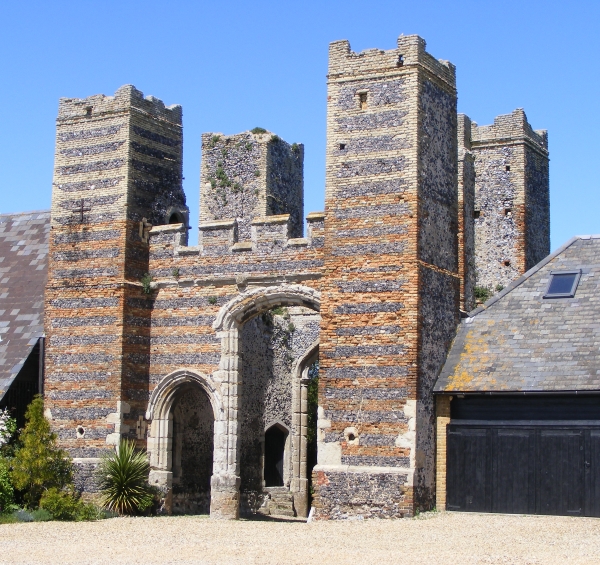 The image for Day 319 of the VM_365 project shows Dent-de-Lion gatehouse, Garlinge. The Gatehouse was constructed in the early 15th century forming the main entrance into the courtyard of a now demolished fortified house which stood to the north.
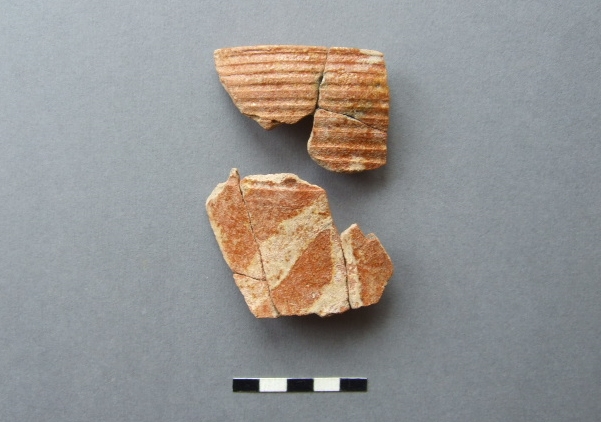 The image for Day 318 of the VM365 project shows sherd fragments from a medieval tableware jug found in 1979 in an excavation at Netherhale Farm, Birchington.