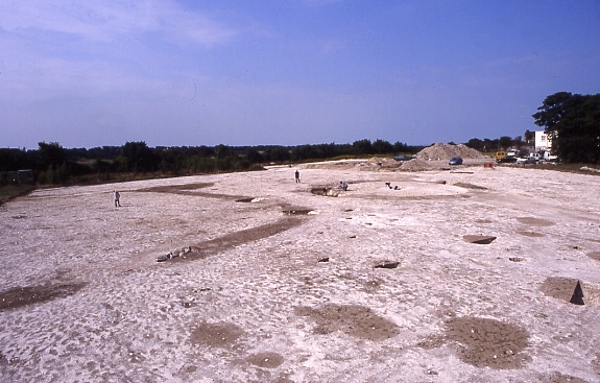
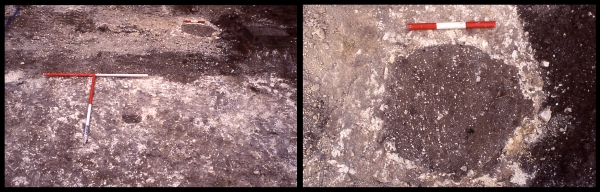
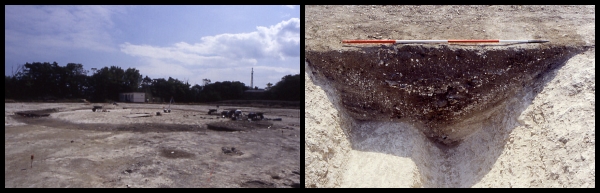
 Today’s image shows two views of a very small excavation carried out during the construction of a garage at North Foreland Road, Broadstairs in 2004.
The North Foreland landscape is particularly rich in archaeological remains. Cropmarks identified by aerial photography show an ancient trackway along the edge of the hillside. A large open area excavation carried out in recent years on the previously undeveloped playing fields of the former St Stephen’s College confirmed that the area had been occupied at least since the Early Bronze with the construction of burial mounds and during the Iron Age when a settlement was established which included a Middle Iron Age enclosure and significant numbers of postholes and large storage pits.
The area to the east of the site was developed for housing from the late 19th century onwards and although occasional archaeological discoveries were reported these were generally made before a time when the significance of the area was understood and archaeological features were often not recorded in detail or at all. So how do we fill in the blanks in an area that has already been developed?
As a local archaeological organisation, we are often involved in very small scale construction projects such as, for example, a small garage for a house along North Foreland Road, not far from the St Stephen’s site shown in the images above. The excavations only covered an area of approximatley 6 metres by 5 metres and the ground had already been disturbed by modern drainage which is visible as a linear stripe of dark soil visible above the T shaped scale in the picture on the right. However, eight pits and postholes containing Iron Age pottery still survived suggesting that the Iron Age settlement excavated at the St Stephen College site was much more extensive. An example of one of the pits is shown in the picture on the right.
Through the keyhole of small investigations such as these we can fill in the missing detail and gradually build up a bigger picture of the landscape.
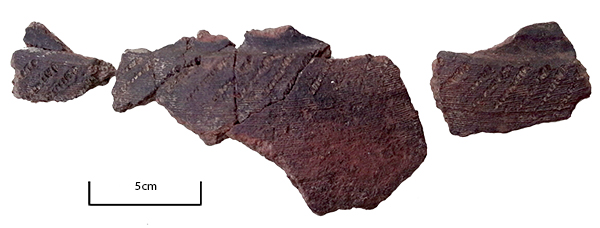
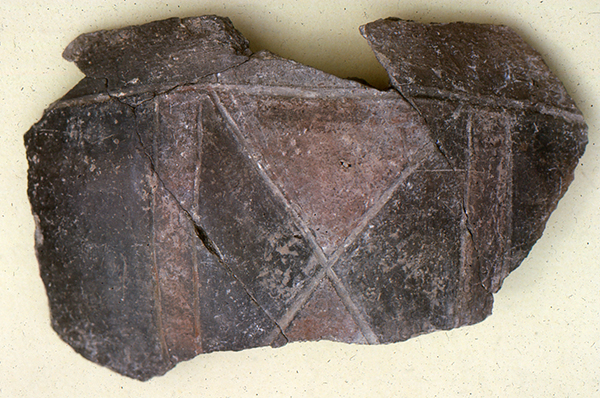 Today’s image for Day 303 of the VM_365 project shows a number of joining sherds from the upper part of an Iron Age polychrome decorated pottery vessel, which was found in an excavation at Dumpton Gap in the 1960’s.
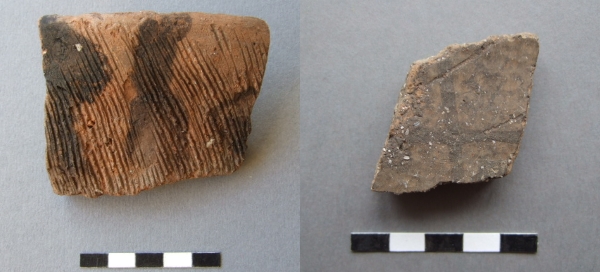 Today’s image for Day 302 of the VM_365 project is of two Iron Age pottery sherds, both from a similar archaeological period and from the same site near Broadstairs. Both sherds seem to exhibit an apparent surface decoration. However, the origin of the patterns on the surface of each sherd is quite different.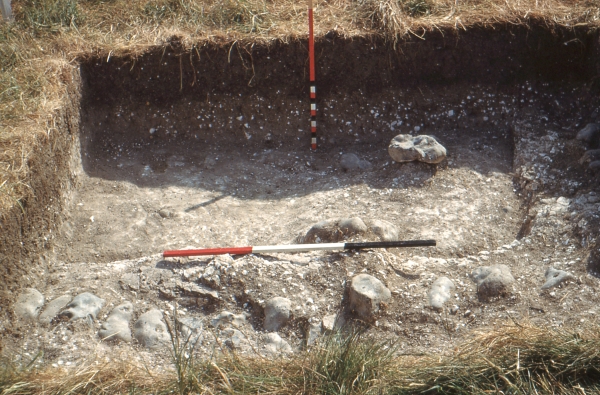
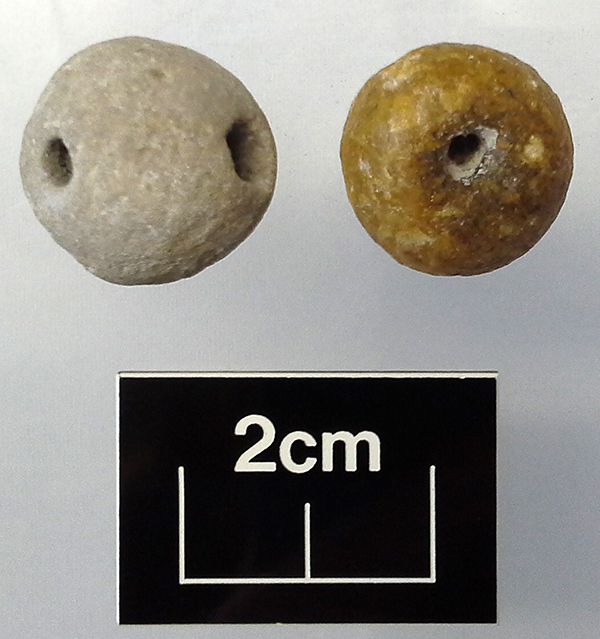 Today’s image for Day 300 of the VM_365 project shows two Late Iron Age/Roman beads from the
  Today’s image, for Day 299 of the VM_365 project, shows six joining sherds and two other sherds from the decorated shoulder of the same Late Iron Age vessel. The sherds belong to the pottery assemblage that we have been examining in our VM_365 posts, all contained in the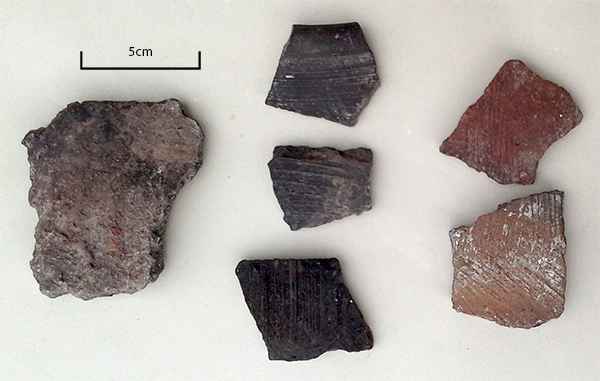
 For Day 286 of the VM_365 project we have an image that shows another of the ring ditches of a Bronze Age barrow, excavated at St Stephen’s college, North Foreland in 1999. The ring ditch was shown in an overview of the site which was the image featured on