Category Archives: Archaeology

VM_355 Day 112. Roman Brooch from Minster.

VM 112

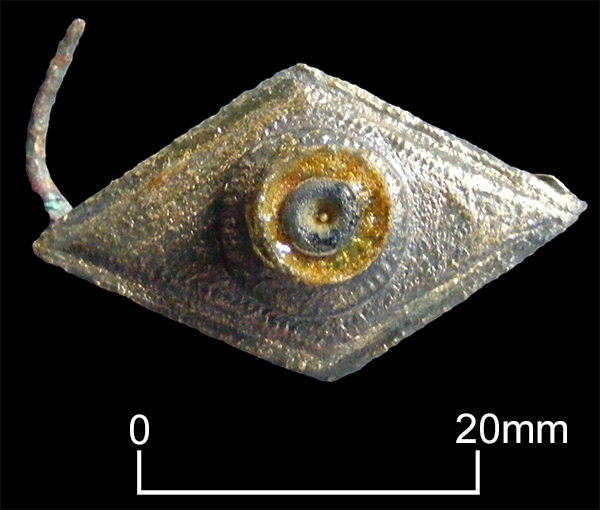
Today’s image is another brooch found at the Roman villa site at Abbey Farm, Minster.

This lozenge shaped plate broochwith an intact pin, although bent, is made of copper alloy.  It measures 33mm long and 18mm wide and has a circular hollow back. There is a central raised projection that was filled with enamel that is now coloured yellow and dates to the 2nd to 3rd centuries.

Other Roman brooches from the site have been posted on Day 88, Day 89, Day 90 and Day 96.

VM_365 Day 111. Shale bracelet from Margate

VM 111

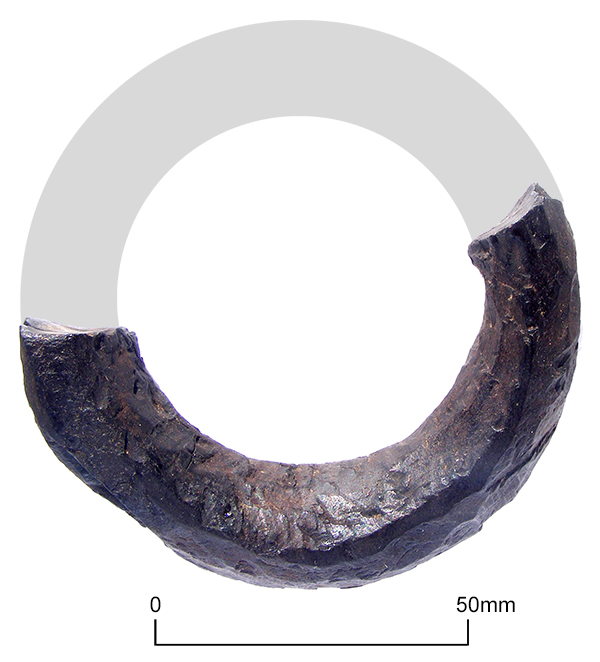
Today’s image is part of an Iron Age shale bracelet found during an archaeological evaluation at Hartsdown, Margate in 1995. The bracelet was found in a storage pit that had been filled with rubbish when it was no longer needed.

The bracelet is carved from Kimmeridge shale with ground faces on the front and back, the inner and outer surfaces are unpolished.

VM_365 Day 110. Iron Age Weaving Comb

VM 110

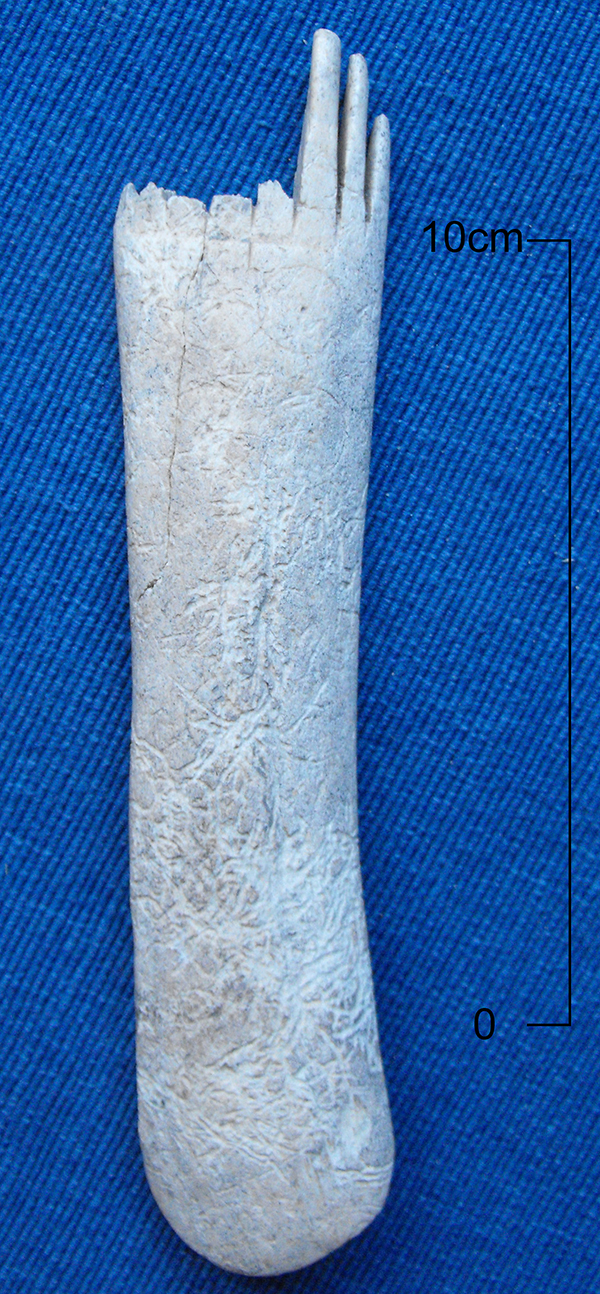
Today’s image is of an Iron Age weaving comb from the Iron Age settlement at Dumpton Gap, Broadstairs.

Most clothing would have been made from sheeps wool woven by hand on wooden looms. Combs such as these were used to push threads in place while weaving. Other artefacts associated with cloth making such as loom weights, used to hold the threads taut on the loom, and spindle whorls, used for making the yarn are also commonly found on settlement sites.

This particular comb was found in a rubbish pit dating to the late Iron Age, around 25 BC-25 AD. It is made from animal bone and has been decorated although the irregular lines you can see on the surface are caused by tiny plant rootlets scaring the surface whilst it was in the ground.

It is not clear if this comb had actually been used as it appears to be unfinished. If you look carefully at the upper part of the comb there are four circles marked out, two overlapping, and two others are visible in the middle on the right side. These circles were scored using a compass and would then have been carved to form ring and dot decoration. The decoration on this comb did not progress beyond scoring the circles; perhaps it was a practice piece, as two sets of the circles appear to overlap and it was discarded, perhaps the teeth broke before the decoration could be finished, or, perhaps it was needed before it could be finished and was used anyway.

VM_365 Day 109. Roman Kitchen Round up

VM 109

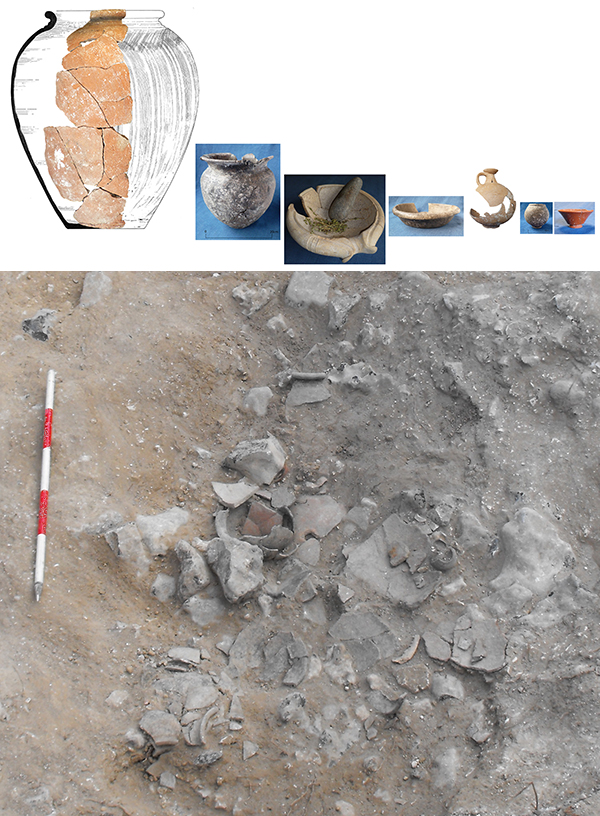
For Day 109 of VM_365 our image shows a line-up of the images of the reconstructible vessels that were present in the dump of pottery from the Roman Building at Fort House, Broadstairs. Each of the pots, a samian cup, a poppy head Beaker, a flagon, dish, mortarium and two storage jars, one small and one very large , has been shown in earlier posts which have told the story of the Roman site in Broadstairs where they were found and how the vessels were excavated and reconstructed.

The images have been scaled to show the range of sizes in the deposit and you might be able to pick out  some of the individual  vessels that are illustrated in the lower part of the image which shows a photograph of the deposit at the time of the excavation. The pottery assemblage from this deposit (context 1022) was the largest from the excavation site at Fort House, with 841 sherds weighing in at 29.815 kg.

Analysis of the forms and fabrics indicated that at least 25 vessels are represented, these include one flagon, six jars, three bowls, two dishes, four beakers and two storage jars. At least two cups were present and one mortaria. There were three other vessels that could not be identified. One of the finest pots present is a complete cup in Central Gaulish samian fabric (Dr. 33 type).

The fabric of the vessels can tell us something about their manufacturers and the markets that supplied the pottery used on the site. Nearly half of the pottery was made in hand-made ‘Native Coarse Ware’ fabric, fired in high temperature kilns to a hard finish. A quarter of the material was supplied by Roman pottery kilns located along the Thames, which produced vessels in Black Burnished 2 fabric, North Kent Fineware and other greywares. Three of the pots may have been manufactured locally and the samian cup would have been imported.

The flagon and the mortarium that have been reconstructed were products of Roman pottery kilns located in Canterbury. The Mortarium probably came from a kiln that is known to have been close to Dane John mount in Canterbury, or it may be the product of a closely related manufacturer. As one sherd from a jar made in a Canterbury Greyware fabric is the only example of  the products of the kilns of the Canterbury Greyware industry, the range of fabrics represented indicates that the date of the whole group of vessels is later than 175 AD.

The freshly broken condition of most of the vessels that were represented in this assemblage suggests that they were dumped, in one action, immediately after breakage around AD 200, or soon afterwards. The characteristics of the breaks in the pots, which often emanate from a single point where a piece is missing, suggest they might have been deliberately smashed, perhaps with a sharp object.

These vessels can reveal a fascinating snapshot of a moment in time when Broadstairs was part of the Roman world, but we will never really know the full story of what happened to create the pottery dump which has generated such a valuable trail of evidence.


VM_365 Day 108. Roman Native Coarse Ware jar from Broadstairs

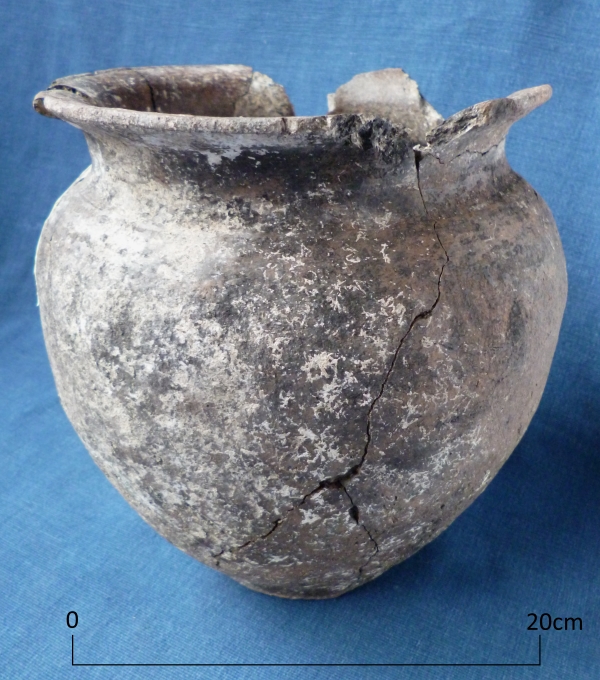
VM 108Today’s VM_365 image is the vessel we featured being reconstructed yesterday from the Roman Kitchen at Fort House, Broadstairs. This everted rim storage jar is made in a black ‘Native Coarse Ware’ fabric similar to the dish shown on Day 104. It is one of six storage jars of a similar size and fabric and dates between 170-250 AD.
VM_365 Day 107 Where have all the fragments gone?

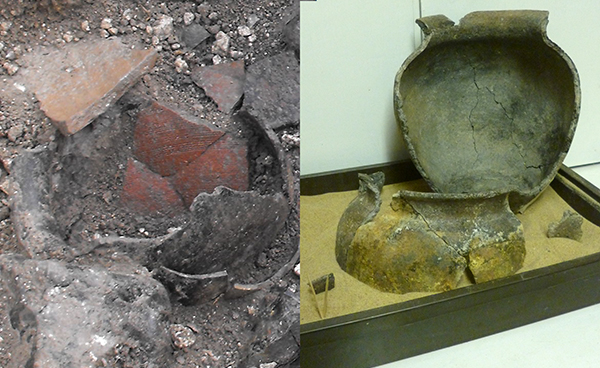
Large Roman jar undergoing reconstruction.
From the ground to gluing tray, large Roman jar undergoing reconstruction.

In the image for VM_365 Day 107, we have one of the last of the vessels from the Roman kitchen at Broadstairs that can be reconstructed. The large jar is shown in the ground during excavation and on the right in the sand tray we use to hold the sherds in place while they are glued together. All of the vessels from the same site shown in the previous VM_365 posts over the last few days have been through this method of reconstruction.

First each sherd must be recovered, located and fitted together in a dry run, to see what order they need to be glued in. The process of sticking the sherds together must be carried out very precisely and in small stages as otherwise the pieces of the vessel may not meet in the middle when the last piece is added.  When the glue is applied the sherds must be held in exact position until the bond is made. Any errors will mean that the next pieces can’t be properly fitted.

The large jar was one of the most obvious near complete vessels within the thick deposit of sherds, however once it was lifted it was clear that it had been broken before it was thrown in and the jar came apart into a number of large pieces. Some of the sherds from one side of the vessel had been spread elsewhere in the deposit and had to be picked out from the spare pieces left over after we had matched as many as possible. We may still be missing a few in the end!

We’ll post more on this vessel once the glue has dried and we can take a proper photograph of the result.

VM_365 Day 106. Roman Poppy head beaker from Broadstairs

VM 106Today’s image shows another of the vessels from the Roman Kitchen at Fort House, Broadstairs.
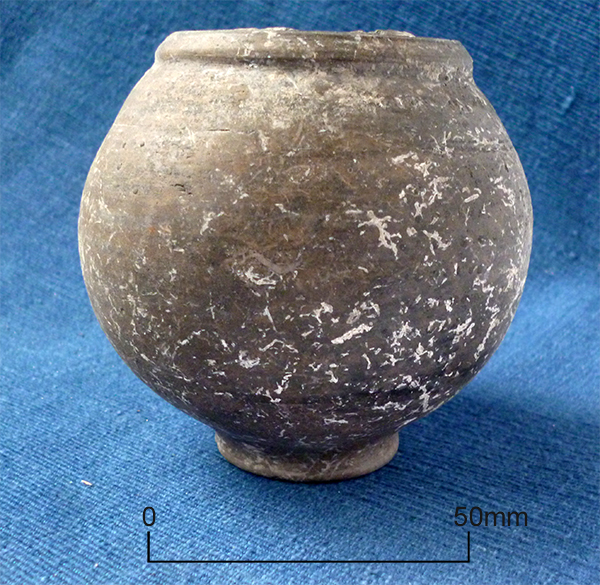
This vessel is one of the smaller ones present in the assemblage, it measures approximately 100mm in diameter and the height without the rim is 85mm, about a tenth of the size of the vessel we showed yesterday. It is of a type known as a poppy-head beaker, so called because when whole the vessel resembles the seed head of a poppy. We don’t know if the Romans would have made the association with the shape though.

This little vessel is nearly complete although it is missing its rim. It is made of Kentish, Upchurch-type ware with a date of 130-170 AD and has a narrow incised border and the body is covered with a pattern of tiny raised dots distinctive of these types of vessels.

VM_365 Day 105. Roman Storage Jar from Broadstairs

VM 105

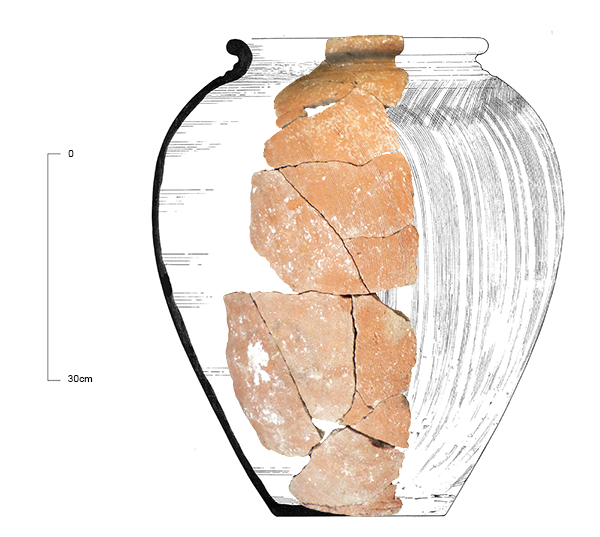
Today’s image for VM_365 Day 105 shows the largest of the vessels that were reconstructed from the pot sherds that seem to have come from a kitchen at the Roman building excavated at Fort House, Broadstairs. Among the fragments recovered were 147 pieces from this large storage jar, some of them very large. Pieces of this vessel, withtheir distinctive combed surface decoration are very obvious in the image of the pottery dump shown in VM_365 Day 98.

The sherds making up the rim are pictured in the front left of the picture published for VM_365 Day 100. The pot had a diameter of around 36cm making it much larger than any of the other vessels present, dwarfing the smallest cups and jars. The outer surface of the vessel had been fired to a red colour, while the interior had gone black. The outer surface was combed while it was still soft to create a pattern of vertical stripes over the whole body.

Although a large number of pieces could be joined together, it was only possible to reconstruct the full profile of one large slice of the vessel’s body due to its size, using a series of large interconnected sherds which are shown in the image. However, one section  was enough to create the drawing of the whole vessel that lies behind the image of the sherds. The curve of the reconstructed section can be projected to show the volume of the whole pot.

Like many of the vessels excavated in the kitchen pot dump, the manufacturing traits of the grog tempered fabric of the storage jar reflected the transition from a Late Iron Age ‘Belgic’ potting tradition into a more Romanised fabric, of a type known as ‘Native Coarse Ware’. Vessels of this type were produced from the late Iron Age into the 2nd century of the Roman period, this one probably in the range of 70-150 AD.

What would such a large jar be used for? Perhaps for storing clean water, or perhaps another liquid like milk. It may also have been used in another cooking or preserving process such as brining or curing a large piece of meat.

VM_365 Day 104. Roman dish from Broadstairs

VM 104

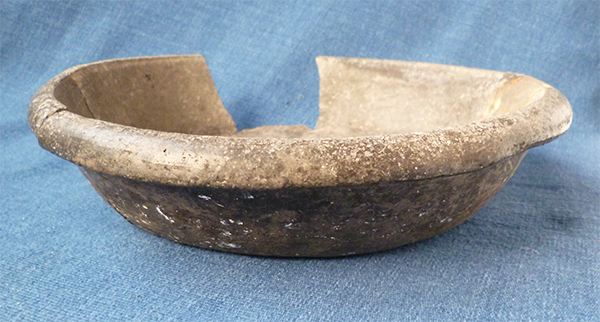
Today’s VM_365 image is another of the vessels from the Roman Kitchen at Fort House, Broadstairs, a flanged dish, around 23cm in diameter. The vessel is made in a black fabric, at a time when Late Iron Age grog tempering potting methods were moving toward a more Romanised ‘Native Coarse Ware’ fabric tradition. This dish is likely to date between c.150 to 200 AD.

The interior of the dish has been polished to a sheen and then divided into quarters by a burnished cross. Most of the dish is present and a large part of it can be seen on the surface of the pottery dump in the centre of the picture published on VM_365 Day 98.

VM_365 Day 103. Roman Flagon from Broadstairs

VM 103The image for Day 103 continues the series of images of vessels re-assembled from the many sherds recovered from the dump of kitchen ware from the Fort House Roman Building.
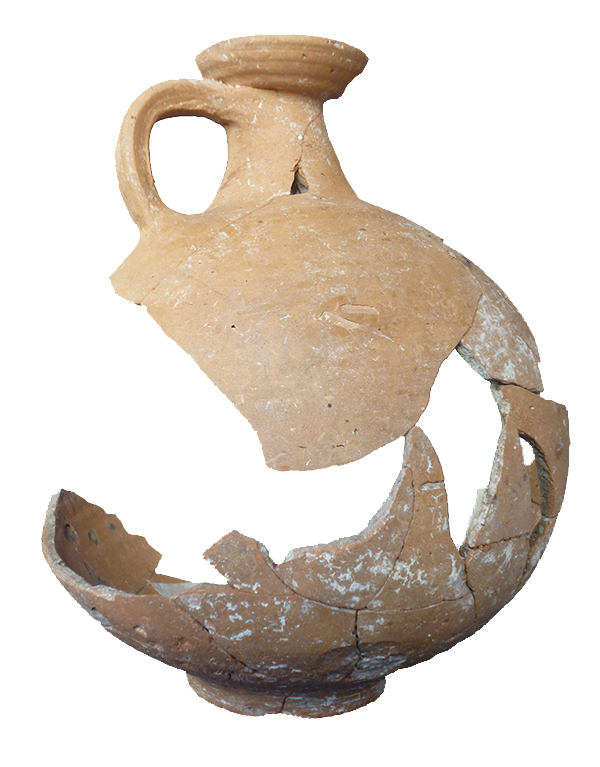
The vessel shown is a ring-neck flagon, a bottle with a handle which would have been used to store liquids, perhaps even wine. The flagon is made of a silty grey fabric with the addition of very fine grog filler and tiny fragments of red ironstone less than 2mm in size. Firing has turned the fabric to a buff-brown colour. The range of manufacturing date for this type of flagon is between 130-200 AD.

As it is pictured here, the pot has been carefully rebuilt from the 53 sherds that were recovered in the excavation, just enough sherds to reconstruct the full profile, although there were quite a few gaps. Fragments of another very similar flagon were present but could not be reconstructed.