Category Archives: From the Archives

VM_265 Day 206 Anglo Saxon glass bowl from Ozengell, Ramsgate

VM 206

Today’s image for Day 206 of the VM_365 project is one from our slide archive collection.

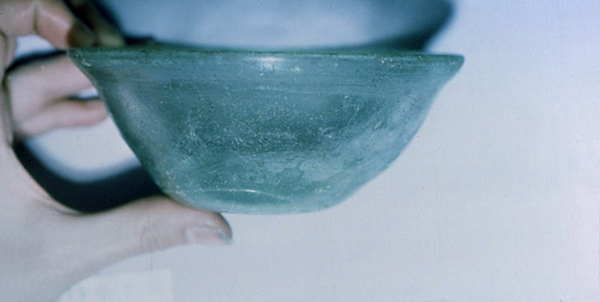
The picture shows one of the many objects found deposited in one of over 200 graves excavated at the Ozengell Anglo Saxon cemetery, Lord of the Manor, Ramsgate between the 1970’s and 1980’s by the Isle of Thanet Archaeological Unit.

This small glass bowl was placed with the burial in Grave 190 along with an iron fragment. We know this period, once refered to as the ‘Dark Ages’, was one where craftsmanship and manufacturing of great skill and advanced technology flourished and as in the Roman period that came before, glass and glass objects were readily available to Anglo Saxon communities in Thanet.
VM_365 Day 203 A Beaker from Dumpton Down Broadstairs

VM 203

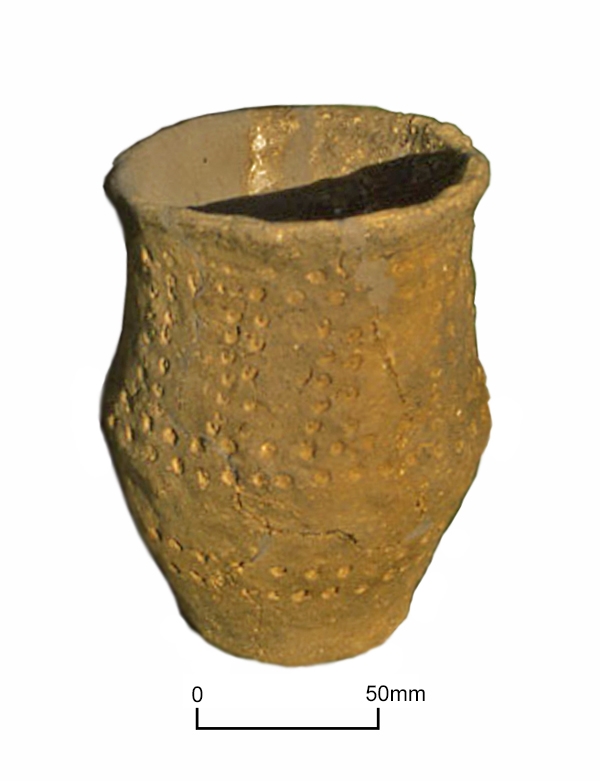
Today’s image for VM_365 Day 203 is of aLate Neolithic/Early Bronze Age Beaker, found in an excavation at South Dumpton Down near Broadstairs in 1992, which was led by David Perkins, the first director of the Trust for Thanet Archaeology.
The beaker was found among a complex group of graves that were enclosed by the ring ditch of a roundbarrow. The graves that were excavated at the centre of the ring ditch contained the remains of seven individuals laid in a variety of orientations. Some of the burials were in crouched positions, others were truncated and disarticulated.
The complexity of the grave group led to some confusion about  what the exact association was between the Beaker and any of the individuals in the grave  group. The confusion was aggravated by the presence of Food Vessel type pottery within the grave group, which is not often associated with Beaker graves. Recent reflection on the exact sequence of events represented by the deposits that were excavated and the initial interpretation made of them, points to the probability that the burial sequence was not properly understood. It seems that the graves within the barrow accumulated over a period of time, cutting through earlier burials and truncating them.
The earliest of the graves appears to be that of an adult buried on its left hand side in a rectangular grave, accompanied by the Beaker. This fits recent discoveries of Beaker burials in Thanet, which generally seem have been made in well cut rectangular graves, probably enclosing a coffin or chamber.
The Beaker is quite crudely made in comparison with vessels like the one from North Foreland shown in VM_365 Day 176, with an unusual scheme of impressed decoration with possible connections to the Netherland’sPotbeker‘ tradition. In the classificatory models that have been proposed for Beakers it belongs to Clarke’s Mid Rhine Group, or Lanting and Van der Waals‘ (1972) Step 3 classification.
The South Dumpton Down Beaker is currently on long term loan to Dover Museum and can be seen in the Bronze Age gallery at the Museum. More information on Thanet’s Beakers can be found in the Beaker gallery of the Trust’s Virtual Museum.

VM_365 Day 171 A feast of flintwork, blades from Neolithic site at Pegwell

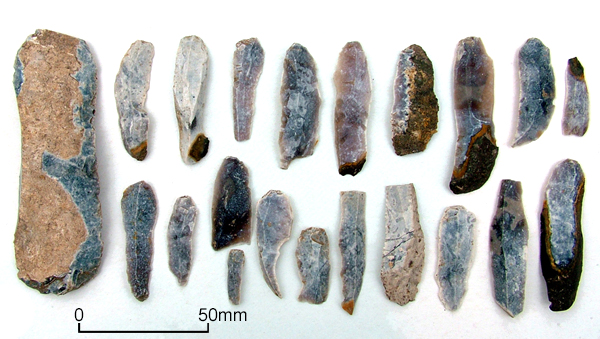
Selection of flint baldes from Neolithic site at Pegwell Bay
Selection of flint blades from Neolithic site at Pegwell Bay

Today’s image for VM_365 Day 171 is of a selection of blade flakes from the flintwork that was found in an excavation on a site at Courtstairs, near Pegwell Bay in 2007.

Although only one stretch of conjoined pits forming a curving line were exposed in the excavation, the finds from the site showed that a sample of the second Neolithic Causewayed enclosure to be found in Ramsgate area had been revealed.

Most of the finely worked flint dated to the Earlier Neolithic period, however a significant proportion was residual, with only a few contexts containing only fresh-looking single period lithics.  Other contexts had a mix of fresh and earlier residual material.

Many blade flakes were recovered from the pit fills, some contexts producing significant quantities. Finely worked blades and bladelets which had been soft hammer-struck from blade cores were particularly common, with serrated blades frequently represented.

The flintwork form this site is a rich source of information on the craft and technology in use in this period and there will be more to come from this site in future VM_365 posts.


VM_365 Day 150 Gold looped pendant from Sarre

VM 150-1

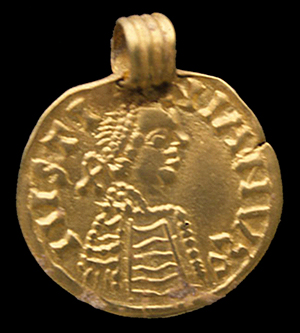
Today’s VM_365 Day 150 image shows a gold pendant excavated from an Anglo Saxon grave  at Sarre in 1990. The pendant is no longer in our possession and the image above was taken at the time of the excavation.

The large, well cut grave (grave 286) had been disturbed by grave robbing in antiquity and skeletal material, objects and fragments were scattered throughout the fill.  The skeletal material that could be identified indicated that the skeleton was of an adult and the grave goods suggest that it is likely to be an adult female. Objects found within the grave included a silver and glass keystone pendant, an iron key, iron knife, amber and glass beads, a bronze casket handle  and a Bronze key.

The pendant, weighing 1.63 grammes, is a made from a gold tremissis; a 6th century Merovingian coin that has had a  hanging loop added. The coin was minted in Austria or Burgundy in the name of Justinian I (527-565 AD) and its composition  has been measured using X-ray fluorescence spectrometry comprising 85.6% gold, 11.9% silver and 2.35% copper.

Reference

Perkins, D. R. J. 1991. The Jutish Cemetery at Sarre Revisited: A Rescue Evaluation. Archaeologia Cantiana CIX pp139-166


VM_365 Day 149 Silver Square Headed Brooch from Sarre

VM 149

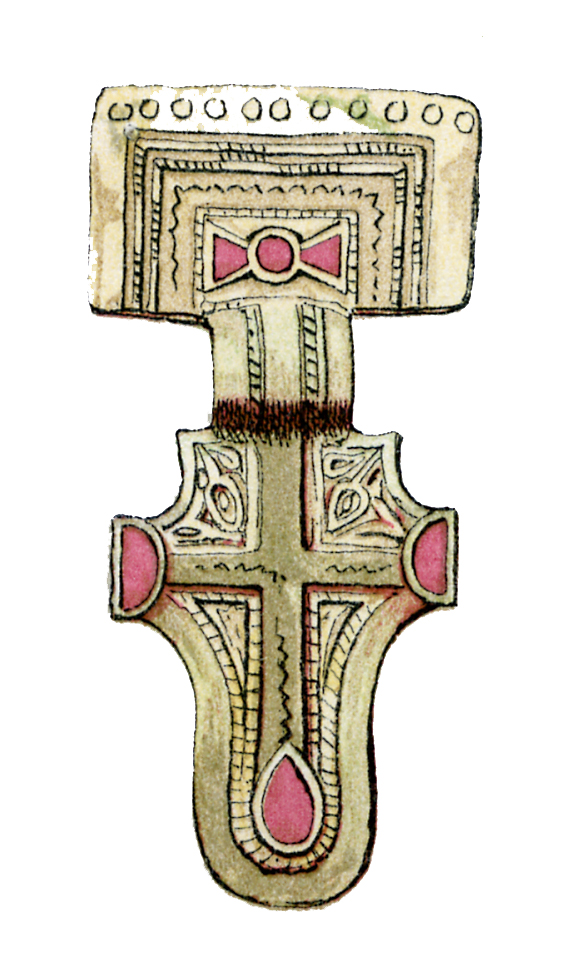
Today’s VM_365 image for Day 149 is of an illustration of a late sixth century,  silver, small square-headed brooch found in Grave 4 at Sarre by John Brent in 1863. This coloured illustration was published in 1863 in an account of the Kent Archaeological Society’s researches of the cemetery at Sarre.

The brooch is very similar to the example found in 1982 during the excavation of the Monkton Gas Pipeline which we posted for Day 147.

It is suggested that both brooches, as well as an example from Bifrons, Howletts all came from the same workshop and although very similar, they vary in slight details and do not come from exactly the same mould.

This brooch was found in the grave of a female along with a Great Square Headed brooch, a bell beaker, weaving baton, crystal ball and spoon, gold braid and other smaller items.

References

Brent, J. 1863. Account of the Society’s Researches in the Saxon Cemetery at Sarr, Part 1. Archaeologia Cantiana V, 305-22.

Perkins, D. R. J. and Hawkes, S. C. 1984. The Thanet Gas Pipeline Phases I and II (Monkton Parish), 1982. Archaeologia Cantiana CI, 83-114.


VM_365 Day 136 Ramsgate Late Neolithic Grooved Ware sherd

Late Neolithic Grooved Ware sherd

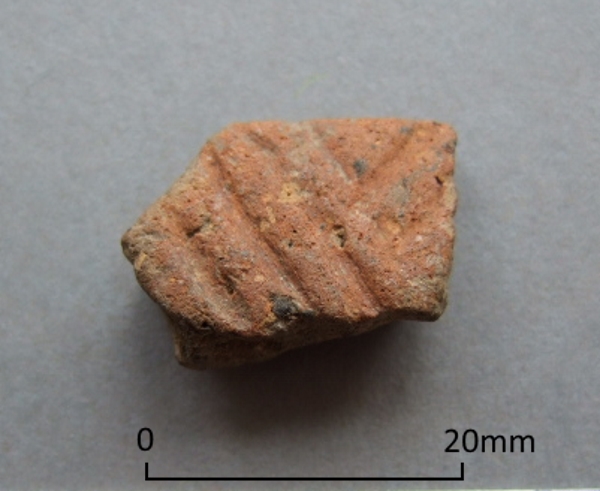
Today’s Image for VM_365 is of a small scrap of Late Neolithic pottery from 1976 excavation of the ring ditch of one of the ceremonial enclosures at Lord of the Manor, Ramsgate.

The sherd is a rim fragment from a tub-shaped vessel with a small-diameter. The exterior of the rim is decorated with incised grooves, the inner edge of the rim has a distinctive bevel, similar to the rims of other examples of this type of pottery. The typical decoration of the sherd with a pattern of grooves in the surface, provides the name that has been given to this ceramic tradition; Grooved Ware.

Before flat based grooved ware vessels began to manufactured, all Early and Middle Neolithic pottery in this country was made with round bases. Grooved Ware is believed to have been first used in the Orkneys, spreading southward across Britain and seems to represent the only truly ‘homegrown’ tradition in the entire history of British ceramics.

The style of decoration on this sherd, coupled with the beveled rim,  places the sherd into the Durrington Walls style, which was current during the main building phases at Stonehenge and is dated to c.2800-2300 BC

To date the tiny sherd pictured here seems to the best example of Grooved Ware archaeologists have recovered on the Isle of Thanet. Although it is small, the sherd  is a valuable hint that there may be more evidence of this important period of settlement to discover in the future.

The image and information for today’s VM_365 post were kindly provided by a guest curator, ceramic specialist Mr Nigel Macpherson-Grant

In 2007 a group of potters experimented with manufacturing Grooved Ware vessels, follow this link to the Prehistoric Ceramics Research Group website article on the process.

VM_365 Day 100. Building up the Roman Kitchen pots

Refitting rims and vessel sections

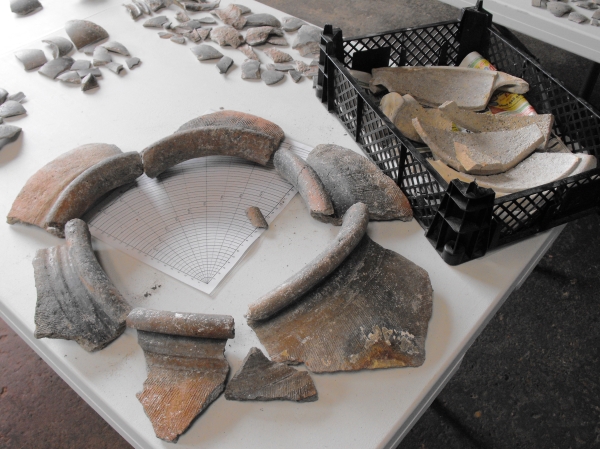
For our 100th day of the VM_365 project we have another image from the Roman Kitchen pots from Broadstairs.

From the sorting and refitting of the mass of pottery from the Kitchen dump, some very distinctive vessels began to emerge and although every sherd was present, some vessels were represented by enough pieces to make a substantial reconstruction.

In the image today the full circuit of the rim of a very large vessel has been assembled. In the tray to the right, the sherds from another nearly complete mixing bowl were gathered together, ready to be re-fitted.

With substantial elements reconstructible, the vessels could be identified very precisely…

VM_365 Day 86. Wooden box stores Roman samian collection

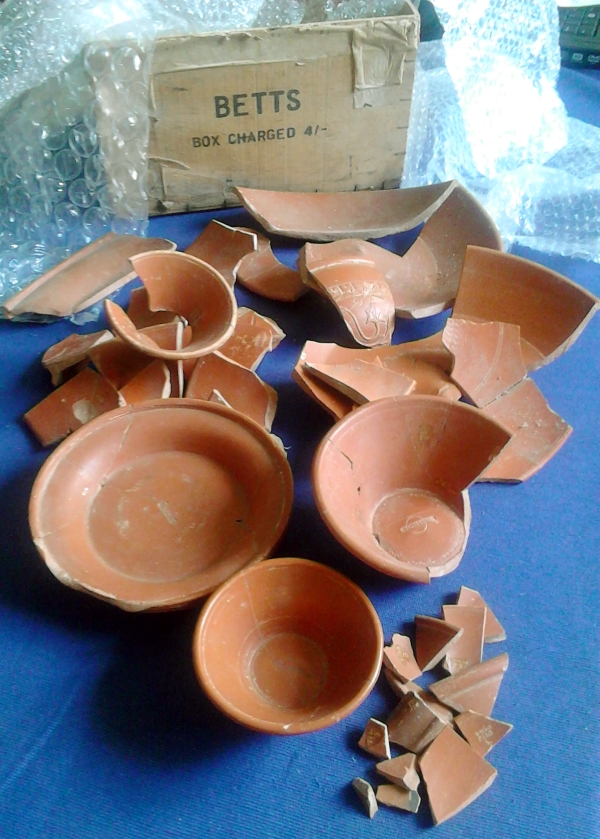
Box stores Roman samian vessels from Drapers Mills, Margate

Today’s VM_365 image is of a collection of  whole vessels and large sherds made from a disticnctive type of Roman pottery called samian ware.

This selection comes from the archive of the excavation carried out at Drapers Mills near Margate between 1959 and 1961 by Mr Joe Coy. The site is known to have been the location of a major Roman building, probably a Villa, which has produced many interesting finds such as the boxer’s head shown in an earlier post.

Over the years the Trust for Thanet Archaeology has acquired the archives of several early excavations carried out by some of the pioneering archaeologists in Thanet. Although we have been supported with donations from our wish list and with funding for storage material, we have limited resources to do everything we might to understand and examine in detail all the material we have in storage.

When we are able to open up and examine the contents of a box, it can reveal hidden treasures like this group of samian vessels and sherds.  Samian was a high status product, manufactured in very large quantities from the early 1st century to the mid 3rd century AD. Samian producing kilns were located in southern and northern France and later in southern and eastern Germany, which were part of the province of Gaul.

Now this important group of material has been rediscovered, it can be examined and dated using up to date knowledge of the production centres and manufacturers. As more is learned from the material archives, the real significance of the Roman sites we have identified in the map of Roman Thanet becomes clearer.

The pottery in this image was discussed in greater detail by Dr. Steve Willis, a specialist in samian ware, on Day 345 of the VM_365 project. An interesting observation on the parallels between the origins of some of the pottery and the box the material was stored was discussed on on Day_346.


VM_365 Day 53 The long history of the British Bake Off

VM_53

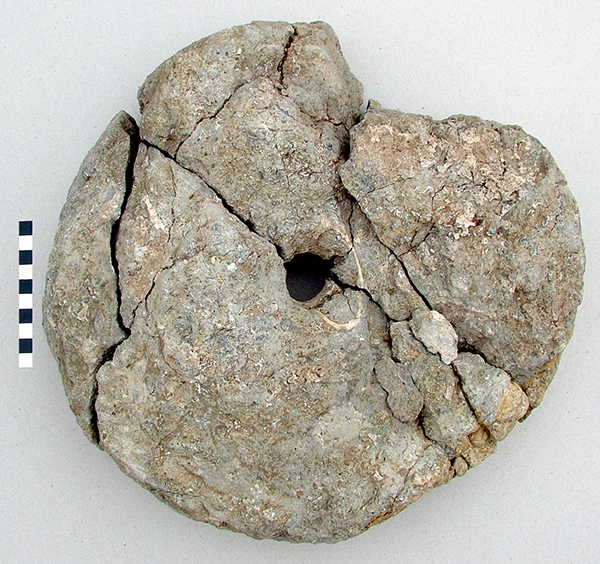
Iron Age quern (150-50 BC) found at North Foreland, Broadstairs. Reconstructed from 11 pieces, c 320mm diameter.

While prehistoric periods are often separated by innovations in the technology of cutting tools, from flints through to copper, bronze and iron implements, one technology seems to link all these periods and to extend nearly to the limits of our own living memory.

For many thousands of years hand grinding of cereals and grains were essential to processing the fruits of agricultural labour into the the food that sustained life each day. In much of the developing world hand querns, mills and grindstones remain an essential part of daily life.

While much of society was devising new and innovative ways of chopping down trees, cutting raw materials and taking a swipe at each other with the latest materials, somebody somewhere was grinding out flour with a rubbing stone, a rotary quern or hand mill. The application of animal, water or steam power eventually scaled up the process, but somewhere in the mechanism remained the grinding surfaces between two stones.

On many sites, whatever the prevailing ‘… Age’ indicated by the pottery, grain processing and storage are the predominant finds, suggesting that what unites the developing history of Britain is one long Grain Age.


VM_365 Day 51 The Keys to Anglo-Saxon domestic life

Iron lock mechanism from an Anglo-Saxon site in Westgate
Iron lock mechanism from an Anglo-Saxon site in Westgate, Thanet

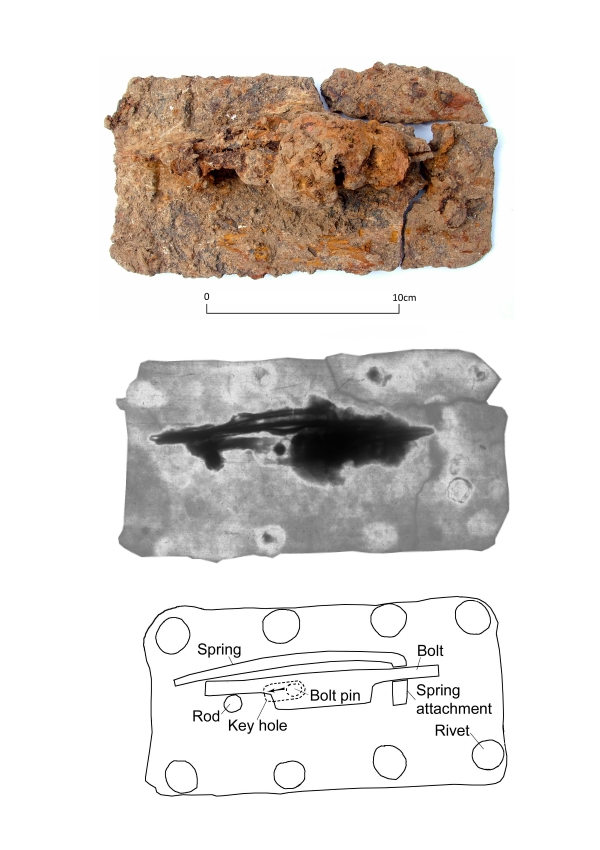
Our image for VM_365 Day 51 is of a find from an excavation carried out on the site of a housing development close to the sea front at Westgate on Sea in 2006. This composite iron object was found among features that represent a phase of a settlement which seems to date to the 8th or 9th century AD. Another of the few Viking age sites known in Thanet.

This complex iron block which was recovered from the fill of one of the pits appears to have  been a lock mechanism, perhaps originally attached to a box or chest.  The mechanism has been reconstructed from the evidence of several X-ray photographs taken at varying intensities which revealed the hidden structure on the back of the plate.

The 2-3mm thick flat iron plate would have been mounted on the external surface of the chest with two rows of four iron rivets or nails arranged along each of the long axes. The front of the plate was pierced with an irregular key hole, centrally placed on the short axis but offset slightly on the long axis.

An iron spring with a right-angled bend was attached to the inside face of the plate. A sliding bolt rested on a rod that projected from the plate, held in place by the spring bearing down on the bolt where it pressed against the rod. The bar appears to have passed through a slot in the spring at a point above the attachment where the spring was fixed to the plate. The bolt would probably have projected a little further, fitting into a socket or staple fitted in the box.

The lock would have been operated by pushing a simple key through the hole in the plate. The key pushed against the bolt pin located on the underside of the sliding bolt at the end of the keyhole forcing the bolt away from the socket which held the box shut.  In its present state the mechanism appears to be in the locked position and sliding the bar would need a little force to lift the spring where it was bearing down on the rod.

Lock fittings and keys are a common find on both Roman and Anglo-Saxon sites and the common discovery of bunches of keys in Anglo-Saxon female graves are interpreted as a symbols of female domestic authority, as holders of the keys to a household chest where the valuable items were kept.