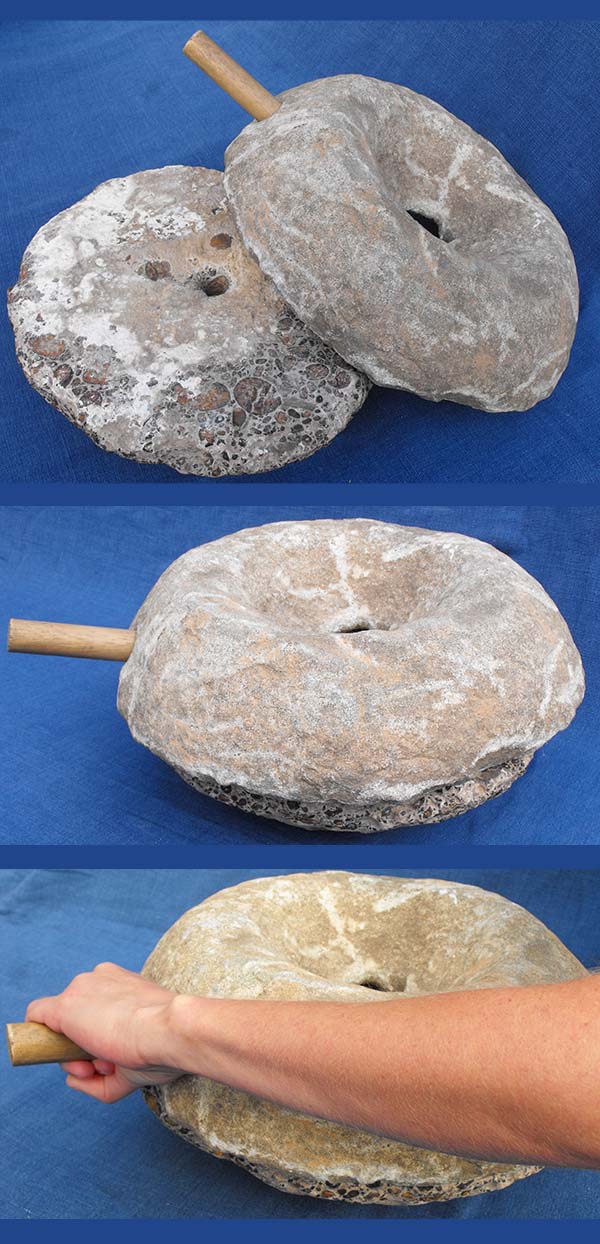
Today’s image is a reconstruction of a Roman Rotary quern. The quern stones were found on two separate sites, one from Broadstairs (bottom) and one from St. Nicholas at Wade (top).
The base has a socket in the centre for a spindle to hold the two sections together. The top stone has a hole for a handle to allow the quern to be rotated backwards and forwards and a hole shaped to form a hopper where grain is poured in. The grain then passes between the grinding surfaces of the upper and lower stones, crushing them into meal or flour.
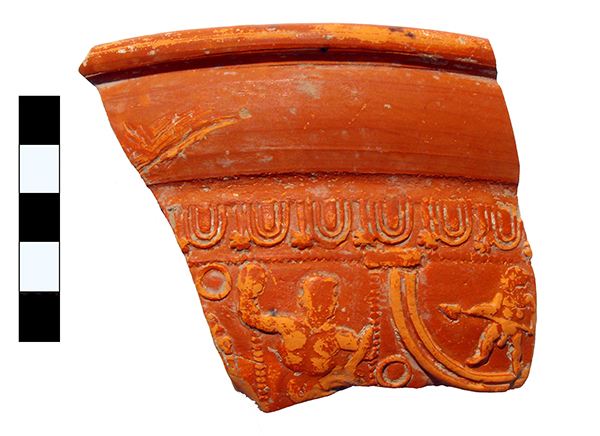
Today’s image shows a sherd of Roman samian pottery excavated from a small site near Bleak House, Broadstairs in 2009. This was one of 81 sherds of samian pottery recovered on the site representing 33 different vessels.
The piece shown is one of 11 from the same highly decorated bowl (a Dragendorf form 37) from Central Gaul, dated between 100-130 AD. The decoration is arranged in panels divided by bead borders under an ovolo (egg shaped) border that surrounds the whole bowl.
The images on the vessel show part of a figure of the war god Mars and in a second panel in the upper half of a medallion, a nude pigmy warrior.
These motifs on samian bowls are common to Central Gaul where this bowl was manufactured.
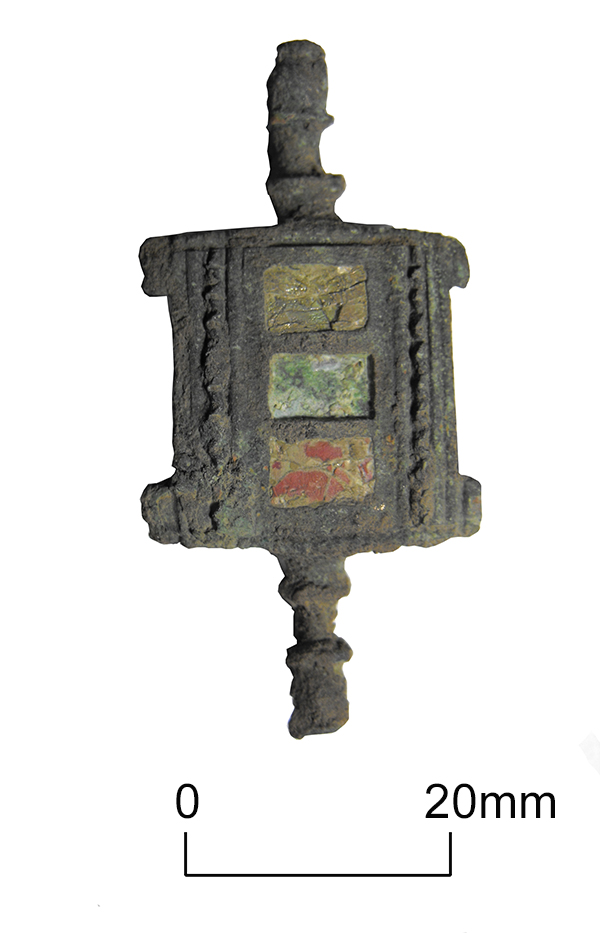
Today’s image for VM_365 Day 90 shows another brooch from Abbey Farm Villa, Minster. This equal ended brooch was found in the subsoil above buildings found on the southern side of the villa complex along with a small quantity of 2nd century pottery.
Over time this copper alloy brooch has become corroded but we can still see that it has a rectangular plate with lugs. The centre has three equal sized rectangular cells filled with enamel; the bottom cell is coloured red, the middle cell is now empty and the top cell appears to have been green or yellow enamel. Either side of the enamelled cells is a side panel with a beaded rim and rectangular lugs at the corners. This type of brooch was widespread in the 2nd and early 3rd century.
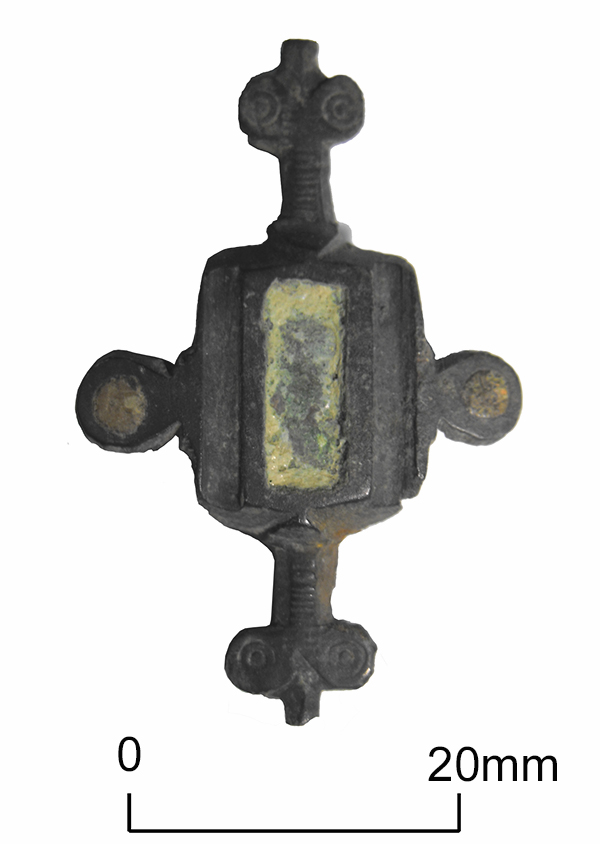
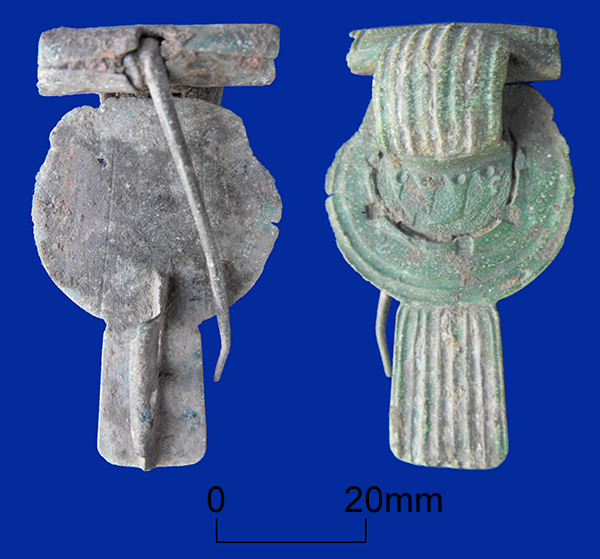
Today’s image is of a 2nd/early 3rd century brooch from Abbey Farm Roman Villa, Minster-in-Thanet. It was found in the upper fill of a well shaft which had been deliberately backfilled with large amounts of pottery and domestic rubbish. The pottery from the well shaft dates to the 2nd century with a few sherds as late as the early 3rd century.
The brooch is equal ended with a rectangular plate and two circular lugs. The projections are moulded and decorated with two sets of concentric circles and are broken at either end. In the centre of the brooch is a rectangular cell which was filled with enamel, now coloured yellow. The lugs are also decorated with two circular yellow enamelled cells.
References
Parfitt, K. 2007. The Roman Villa at Minster-in-Thanet. Part 4: The South-West Buildings, 6A and 6B. Archaeologia Cantiana CXXVII, 261-296.
Thistle or rosette brooch of 1st century date from Minster in Thanet
Today’s image for VM_365 Day 88 is of a brooch from the 1st century AD, which was found in the excavations at the Abbey Farm Villa at Minster in Thanet. This type of brooch has a cast thistle or rosette form with elaborate relief decoration. A cylindrical roll of metal covers the spring for the fastening pin at the back of the brooch.
This type of brooch was first made in the first half of the 1st century AD, before the Roman conquest of Britain. The rosette or thistle brooch was commonly used on the continent, particularly in Gaul and on the German frontier, as well as in southern Britain before the Roman invasion. This type of brooch is occasionally found on sites that date from shortly after the Roman Conquest and often accompanying burials of the early conquest period.
They may have lasted into the Roman period as family heirlooms, because of their particularly fine style and quality.
Reference
Bailey, J. and Butcher, S. 2004. Roman Brooches in Britain. Reports of the Research Committee of the Society of Antiquaries of London No. 68. London.
Box stores Roman samian vessels from Drapers Mills, Margate
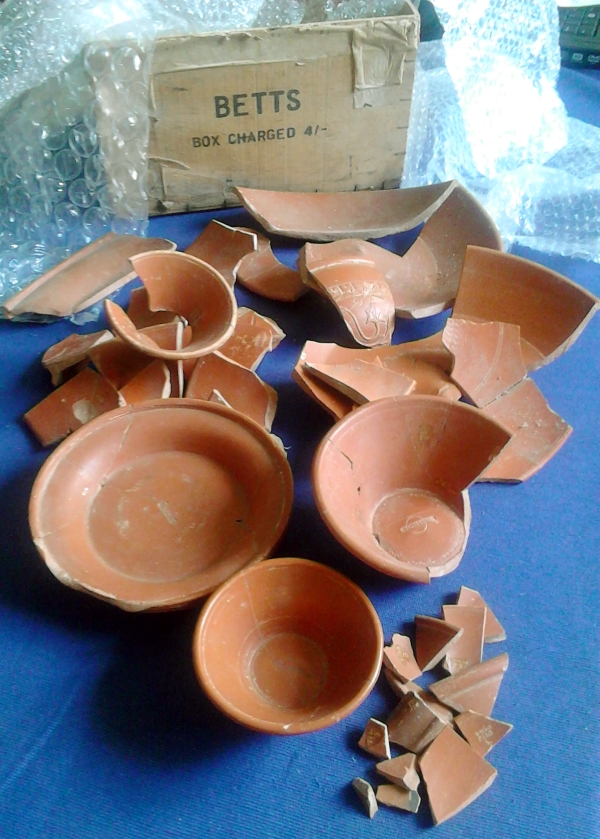
Today’s VM_365 image is of a collection of whole vessels and large sherds made from a disticnctive type of Roman pottery called samian ware.
This selection comes from the archive of the excavation carried out at Drapers Mills near Margate between 1959 and 1961 by Mr Joe Coy. The site is known to have been the location of a major Roman building, probably a Villa, which has produced many interesting finds such as the boxer’s head shown in an earlier post.
Over the years the Trust for Thanet Archaeology has acquired the archives of several early excavations carried out by some of the pioneering archaeologists in Thanet. Although we have been supported with donations from our wish list and with funding for storage material, we have limited resources to do everything we might to understand and examine in detail all the material we have in storage.
When we are able to open up and examine the contents of a box, it can reveal hidden treasures like this group of samian vessels and sherds. Samian was a high status product, manufactured in very large quantities from the early 1st century to the mid 3rd century AD. Samian producing kilns were located in southern and northern France and later in southern and eastern Germany, which were part of the province of Gaul.
Now this important group of material has been rediscovered, it can be examined and dated using up to date knowledge of the production centres and manufacturers. As more is learned from the material archives, the real significance of the Roman sites we have identified in the map of Roman Thanet becomes clearer.
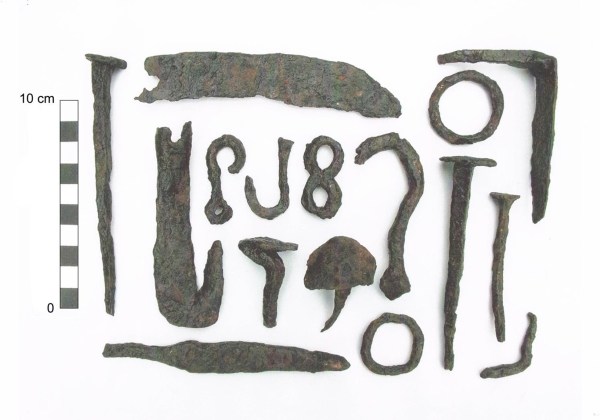
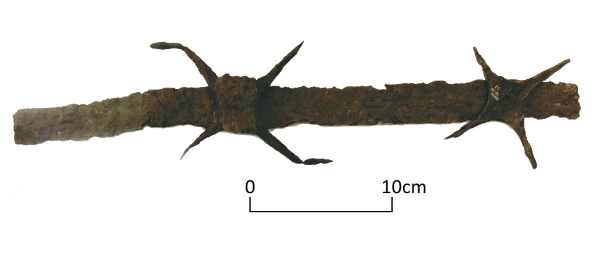
Doctor Arthur Rowe recovered a number of Iron objects from the Tivoli Villa excavations, including the nails, reaping hooks, knives and brackets that are as shown above. He also found a more unusual item shown below, part of a window grille.
Window grilles were structures that retained small panes of window glass, held by the star shaped clips riveted to the bar, within a wider frame. The grille let in light over a larger opening than could be covered by any single pane of glass that could be made at that time. The presence of a window indicates the high status of this building. Examples of the type of window glass that would have been used have been excavated locally at Abbey Farm Villa, Minster.
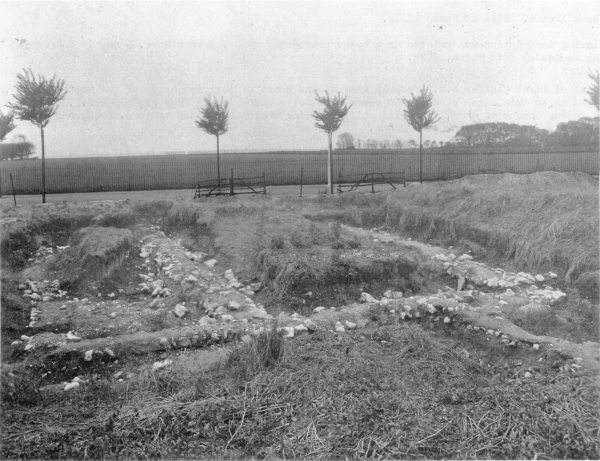
Tivoli Villa excavation facing across Tivoli Park toward Hartsdown c. 1924
In 1924, a Roman building known as Tivoli Villa was discovered while laying out new roads on the west side of Margate. The building was discovered at the southern end of the new Tivoli Park Avenue and was excavated and recorded by Dr Arthur Rowe. Only a single photograph, shown above, and a sketch plan survive although Roman finds from the site are at Margate Museum and the British Museum.
The walls of the building were constructed from flint and there was also evidence of painted plaster and mosaic floors. The layout of the part that Rowe excavated suggests that the structure was foundations of a series of rooms from a much larger range of buildings.
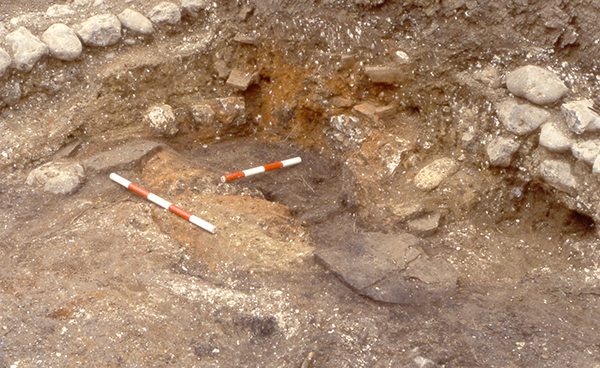
Today’s image is from the Roman cellared building described previously in our VM365 Day 44 post. The picture above shows the remains of an oven constructed from clay and tile. Elsewhere, in the floor, we found several ovens or kilns, one of which was constructed from fragments of millstones and on one of the corners of the building there was a quern stone set in the floor used for grinding grain. From the soot collected in the clay and tile oven shown above charred Spelt, Emmer, Barley and Oat grains were recovered suggesting that this structure is likely to have been used as a bakers oven.
It would be interesting to know what type of bread can be made from grains like this.
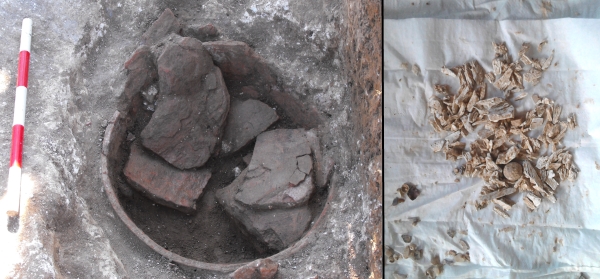
Following on from Saturday’s Environmental Archaeology Workshop, where we processed some samples from a Roman cremation burial, today’s image shows the cremation vessel under excavation alongside an image of the human bone that was extracted from the heavy residue.
The cremation vessel is a large copy of a globular amphora vessel in a local, pink, sandy fabric dating between c. 170-200 AD. The tiny slivers of burnt human bone shown in the right hand side of the image are all that remain of this heavily truncated cremation. The fragments measure between 2 and 10 mm in length and were painstakingly picked out from the heavy residue by hand by the team who took part in the workshop.