Category Archives: Places

VM_365 Day 17: The Boxer

VM 17

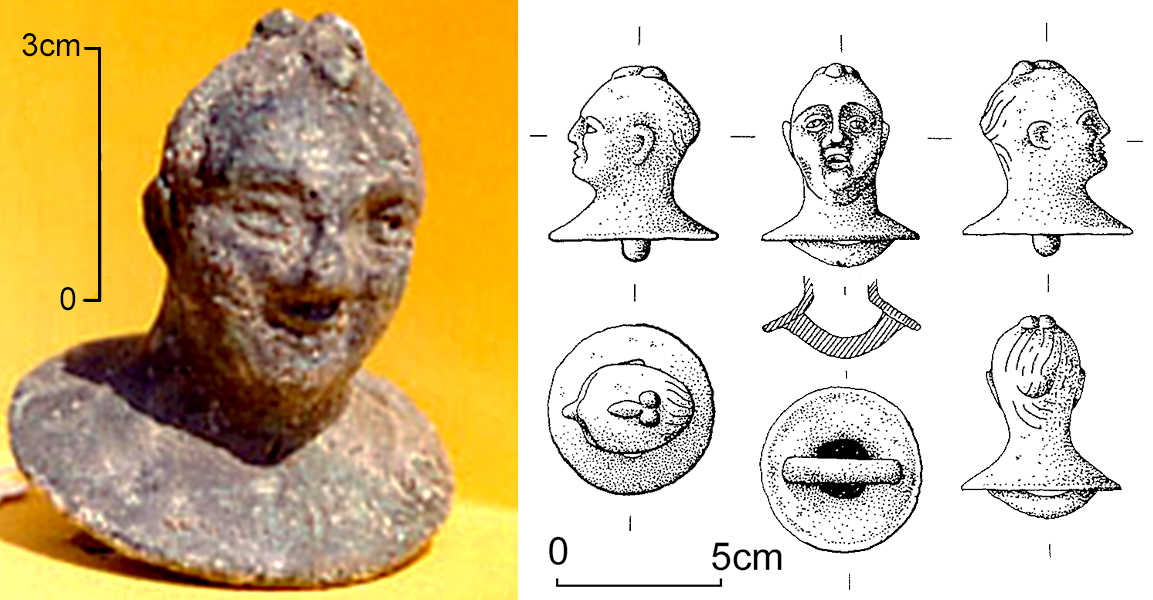
Today’s photo is from the large archive of slides we have from excavations dating back as early as the 1970’s many predating the Trust for Thanet Archaeology. This slide shows a Roman Bronze, no longer in our possession, excavated in 1981 by the Isle of Thanet Archaeological Unit, from a second century chalk quarry at St Peter’s Footpath near Draper’s Mills, Margate.  Alongside the slide are Dr Dave Perkins’ illustrations which show it in more detail.
The head is bald and shows a lock of wavy hair at the back. There is a phallus and a pair of testicles modelled on top of the head; a symbol used to ward off the ‘Evil Eye’.
The head is hollow and measures 63mm high with a 50mm diameter base. It was probably a decorative mount for a horse harness and intended as a good luck charm.

The full details of the Boxer were published in Kent Archaeological Society’s journal Archaeologia Cantiana 97 pages 307-311 by the late Dr David Perkins.
VM_365 Day 16 The intellectual in pursuit of the unglueable!

Following on from VM_365 15, today’s image shows how it is possible to reconstruct vessels when only fragments remain.

VM 16

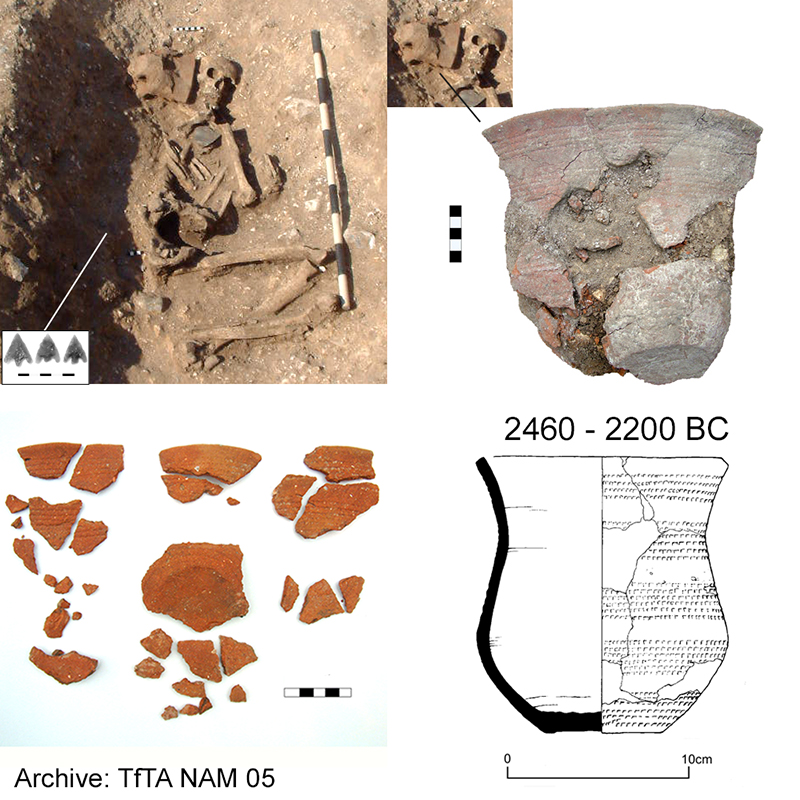
The sherds from a once complete Beaker vessel were found in the grave of a 40 to 50 year old male, radiocarbon dated to 2460-2200 BC, excavated near the QEQM Hospital, Margate. The vessel had been crushed as the grave structure decayed and some sherds had eroded completely making it impossible to reassemble. The vessel was reconstructed instead with a drawing by taking careful measurements of joining sections of remaining sherds and using the measurements to complete a full profile and section.

VM_365 Day 4

Is this Thanet’s earliest art?

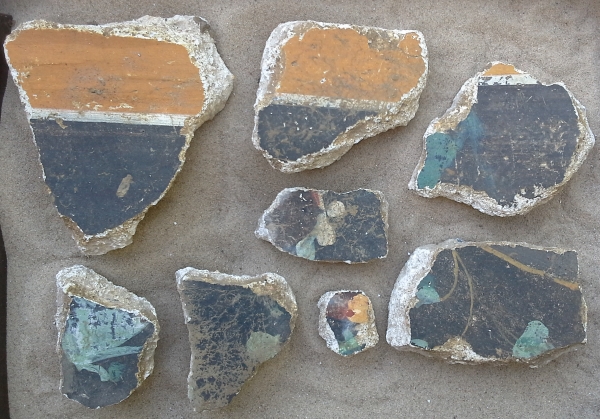
Following on from yesterdays image, today’s VM_365 picture is of some fragments of painted plaster found at the Abbey Farm Roman Villa at Minster in Thanet.

VM 4
Painted wall plaster from Abbey Farm Villa, Minster-in-Thanet

We have over 7,500 pieces of painted wall and ceiling plaster from the site ranging in size from a few centimetres to roughly the size of an A4 page.

As the technique used here was fresco, where the paint was applied directly to fresh plaster, we know that the artist who painted these designs must have been on the Isle of Thanet carrying out the work. This makes them one of the earliest artists in the area.

Visit the Virtual Museum to see some of the other pieces of plaster from the site.

VM_365 Day 3

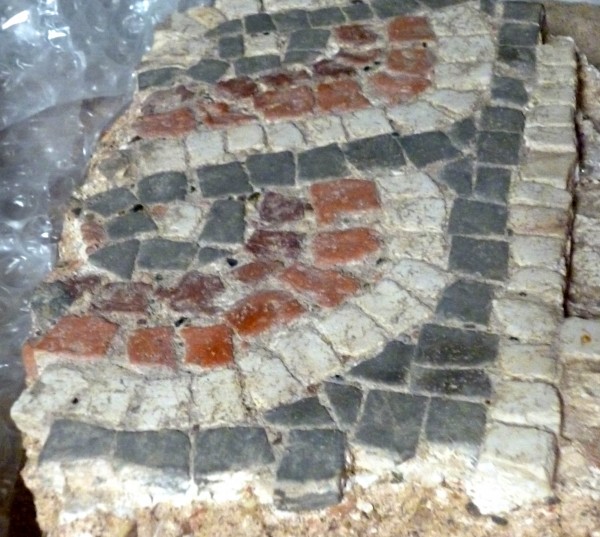
Fragment of Romano-British mosaic
Fragment of Romano-British mosaic from Minster in Thanet

The image for our VM_365 project today is of a fragment of Roman Mosaic with part of a guilloche pattern that was found in the excavation of a Roman Villa at Minster in Thanet.

One of the most impressive Roman buildings to have been discovered on the Isle of Thanet to date and almost certainly on of the most important places in the area in the Roman period.

VM 3-1
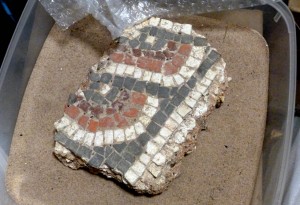
Mosaic fragment in its storage container

Several of these small fragments of Mosaic from the excavation are in storage, but there were no floors of any size surviving in the excavated remains of the villa. The pieces we have survived because they had been broken up and had fallen into a deep chamber within the northern apse of the building.

2001_0101_000620AA
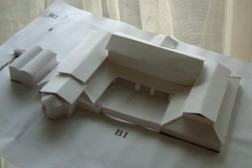
This architectural model is one of our attempts to show what the building was like in one of its major periods of use.

It is useful to try to reconstruct the shape and size of the Villa building with its main range, wings and detached bath house building, which was served by its own piped water supply.

With only the ground plan visible from the robbed remains of walls it is difficult to know exactly what the structure of the building was like, but with the few mosaic fragments we have, we can at least assume that like other buildings of the period it had several of these grand decorative surfaces. The full history of the building and the details of exactly who may have lived in and around it will probably remain unknown.