Anniversary Celebration Part 1 – Keynote Lecture

Find out more about the Trust for Thanet Archaeology (PDF File)

Celebrations for the Trusts 25th Anniversary began this week with a successful keynote lecture given by the Trust for Thanet Archaeology’s Deputy Director Gerald Moody.
Many people with an interest in Thanet’s Archaeology met at the Touchdown Bar on the Broadstairs Campus of Canterbury Christchurch University where they were welcomed with a complimentary drink and refreshments, followed by toasts from the Trusts President David Steed and the Chair, Simon Perry. David Steed spoke briefly about his involvement in the formation of the Trust in 1988, reading from a letter detailing the programme of an event that was held that year to welcome its foundation.

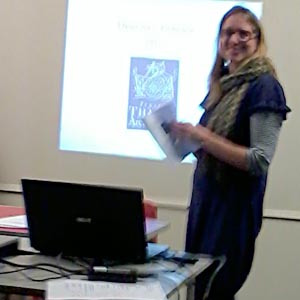
The focus of the celebration on Tuesday was the Keynote lecture given by the Trust’s Deputy Director Gerald Moody. The talk first looked back at the early archaeologists who worked in Thanet in the nineteenth century, moving on to show how important these early excavations were  in developing Thanet’s archaeological record, and how influential they were in the foundation of the Trust for Thanet Archaeology. Gerald emphasised how the excavation in the late 1970’s of a prehistoric site at Lord of The Manor, Ramsgate influenced the late David Perkins into developing his interest in archaeology. Eventually David was employed in the Manpower Services Scheme to work on excavations at Lord of the Manor and other archaeological projects and museum work, including the Ramsgate Maritime Museum display of artefacts from HMS Stirling Castle. With the advent of PPG16 and the end of the Manpower Services scheme, David became the first Director of the newly founded Trust for Thanet Archaeology. Later, Gerald described how a young girl was taken by her father to visit the Lord of Manor excavations in 1978. This girl, Emma Boast, eventually trained as an archaeologist at York University and was later taken under the wing of David Perkins, who helped with information for a dissertation project on Anglo-Saxon Thanet. Employed by the Trust in the late 1990s after working as a field archaeologist in North Yorkshire, Emma Boast became the second Director of the Trust for Thanet Archaeology in 2003 following David Perkins’ retirement. In 2003 she was also joined at the Trust by Gerald Moody, who would later become Deputy Director.

The talk detailed some of the significant excavations that the Trust has carried out and mentioned many of the people who have helped the Trust, as volunteers and employees. With the amount of development led excavation work decreasing in the recession, Gerald Moody emphasized the importance of the Trust’s education work and showed examples of activities at local schools and the University of Kent.

Hearing the talk given last night it is clear that the Trust for Thanet Archaeology, originally under the leadership of David Perkins, and now by Emma Boast and Gerald Moody has grown into an important local heritage organisation dedicated to bringing Thanet’s archaeology to the public. After the first 25 years successful years since its establishment, anyone interested in preserving and promoting Thanet’s archaeology can feel secure in the knowledge of the Trusts success. Long may it continue.
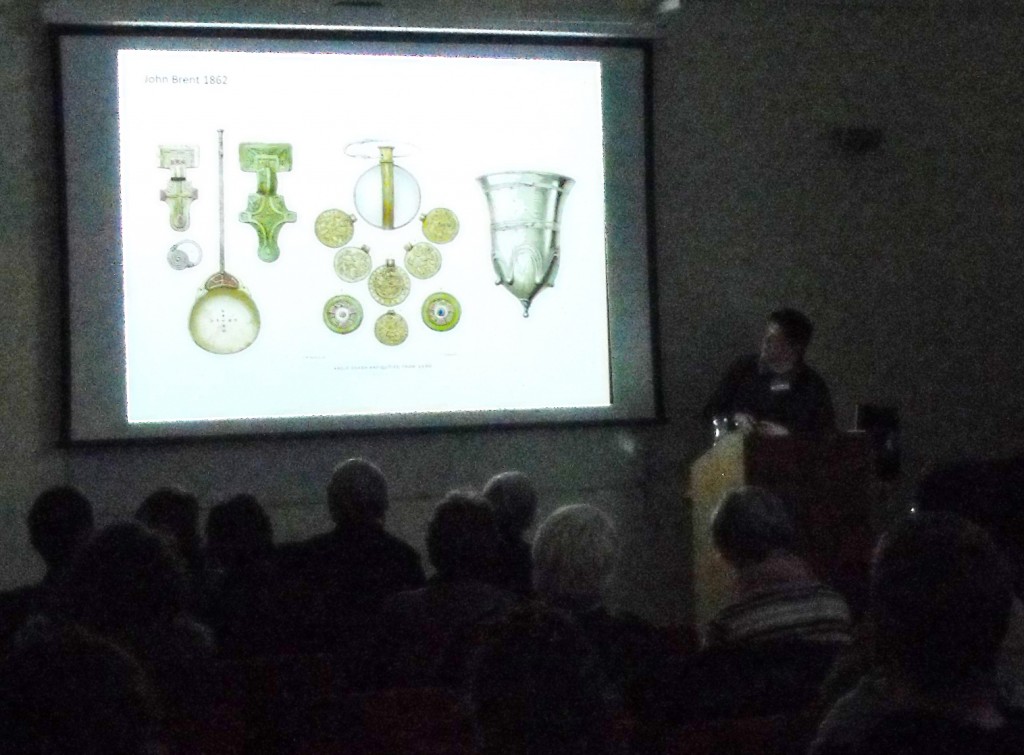
pic for journal blog

Events to celebrate 25 Years of Research and Education in the Archaeology of Thanet

Updated: 9th April

The Trust for Thanet Archaeology was founded on the 24th of April 1988. We will be celebrating our 25th anniversary in 2013 in April with a keynote lecture on the evening of the 23rd, held at the Broadstairs Campus of Canterbury Christ Church University. A one-day conference will be held at the same venue on the following Saturday 27th of April.

Keynote Lecture – Tuesday 23/04/13

The Trust for Thanet Archaeology: 25 Years of Archaeological Research, Retrospect and Prospect

Venue: Christ Church University, Broadstairs Campus, Northwood Rd, Broadstairs, CT10 2WA, Room CG48

Ticket price for lecture only: £ 5.00

Refreshments from 7pm. Lecture begins 7.45pm

The Trust for Thanet Archaeology was formed on the 24th April 1988. Deputy Director, Ges Moody, will highlight the achievements of the Trust for Thanet Archaeology in exploring archaeology in Thanet over the last 25 years and look at what the future holds for archaeological research in the area. The talk will be illustrated by images and information from many of the important excavations carried out by the Trust.

To celebrate our 25th anniversary we invite you to join us before the lecture for a drink and light refreshments at the campus from 7.00pm

One day conference – Saturday 27/04/13

Exploring our Past – Preserving our Heritage

Venue: Christ Church University, Broadstairs Campus, Northwood Rd, Broadstairs, CT10 2WA, Room CG48

Ticket price for conference only: £ 15.00

Registration and refreshments from 9.30am, talks start at 10.00am, Conference ends 4.00pm

The Trust’s involvement in Thanet’s Heritage is about more than the archaeology beneath the ground. We are hosting a one day conference exploring the themes of the Landscape, Townscape and People-scape of the Isle of Thanet to consider the heritage all around us. Talks by a wide range of speakers will explore the remains of lost industries, unusual artefacts and hidden places, with the aim of raising interest in the promotion, preservation and future funding of Thanet’s Heritage

Update:

Thinking of making an application for Heritage Lottery Funding?

The last session of the day will highlight some successful applications for Heritage Lottery funding for community projects by the speaker David Crawford-White, Outreach and Learning Officer for Oxford Archaeology East. This will include advice on applications and handouts with examples of successful applications. This should be useful guidance for any groups or individuals thinking of making an application for Heritage Lottery funding from a very successful practitioner. Find out about the lecture, conference, speakers and subjects from the links below:

Download the programme

Download a flyer

Find out about the speakers and subjects


Get tickets

Tickets can be ordered by post with the order form at the end of the programme, or by secure PayPal payment using PayPal or credit or debit card

We offer a discounted ticket for both events for £ 17.00

Book your ticket with PayPal here


Stonehenge Skeletons

Five years ago the Trust for Thanet Archaeology assisted with a research project to explore the Beaker population of Britain by identifying isotopes in the  teeth of individuals who buried with  beaker vessels in the Early Bronze Age.

The isotopes give clues to the diet and mobility of the populations, in attempt to find out whether people using Beakers in their burials were part of the general population, or had come to Britain in a new wave of migration from the continent.

Skeletons of Stone Henge, showing on Channel 4 0n Sunday 10th of March will be exploring some of the results of the research, and the implications to the  history of our largest prehistoric monument, Stonehenge which may have been built by these Beaker using people.
The programme will include film of two Beaker period Skeletons excavated in Thanet by the Trust for Thanet Archaeology, and hopefully, some more information on their significance in the geral population.To find out more about the Beaker burials that have been found in Thanet, visit our Virtual Museum Beaker Gallery here: http://www.thanetarch.co.uk/Virtual%20Museum/2_Galleries/GBeaker%20Content/GBeaker_Intro.htm

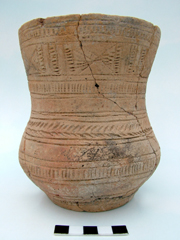
Early Bronze Age Beaker Vessel
A Beaker from a burial at North Foreland, Broadstairs, Kent

If you miss the programme on Sunday, follow this link to the programme website and watch it later!

http://www.channel4.com/programmes/secrets-of-the-stonehenge-skeletons

To find out more about the aims of the research follow this link to the Sheffield University research page: http://www.shef.ac.uk/archaeology/research/beaker-isotope

Link to the Past 2013

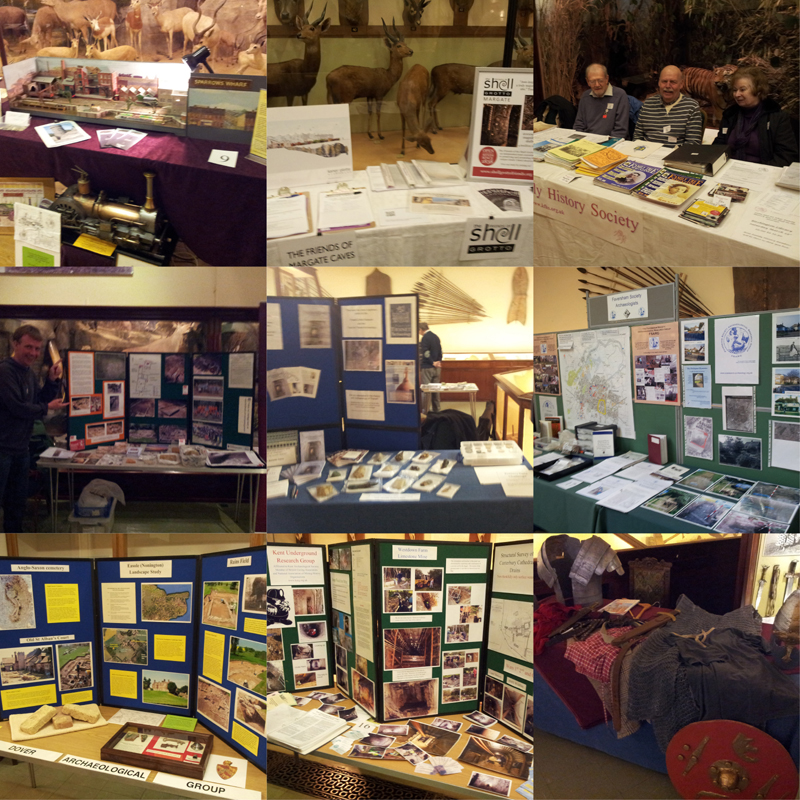
Link to the Past was held at the Powell-Cotton Museum on Sunday the 10th of February. Bringing together many groups from Thanet and Kent who are involved in preserving and promoting the rich heritage of Thanet and the rest of Kent. Stands and displays that displayed the work of the groups, or each of the historic sites, were threaded through the amazing galleries of the museum.

Many people braved the threatened snow to find out how they can get involved in history, archaeology and genealogy; or visit and support some of the heritage attractions of the region.

Four fascinating talks were held over the day, on the role of Quex House in World War One, Kent’s underground sites, how a family love story was discovered in the National archives and the archaeology of the Quex Park Estate.

The Trust for Thanet Archaeology stand held our handling collection of artefacts representative of the long prehistory of Kent and of the Isle of Thanet. In another gallery we had our children’s activities with a collection of historic costumes, dig boxes and a chance to try out archaeological recording techniques on a skeleton.

It was a great privilege for the Trust to to have been able to work in partnership with Powell-Cotton Museum to facilitate Link to the Past, and help  showcase the great range and depth of Heritage and history in Thanet and Kent and bring this community together for the event.

Image of a selection of the stands at Link to the Past
A selection of the stands at Link to the Past

How do you make Roman Armour from household items?

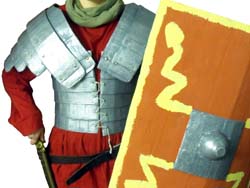
Our Roman armour and shield

As you can see from a previous post we have been dressing people up as Roman Legionaries. Just how did we make a full suit of Roman armour from everyday items?

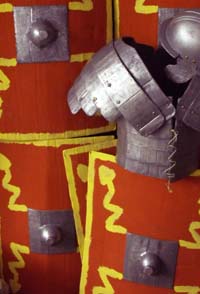
Roman Legionaries wore a standard set of upper body armour called Lorica Segmentata, made in sections built from strips of steel, riveted and laced together.

A trawl of the internet revealed some good ideas about making a Roman soldiers costume for children, but nothing as ambitious as recreating a set of junior Lorica Segmentata from easily obtained items.

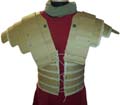
The armour under construction

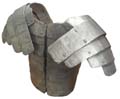
We used a number of good published diagrams of the components of Lorica to create a parts list and templates for the strips of armour and cut the sections from stiff corrugated card. The sizes and number of strips in body armour and the shoulder plates were reduced to fit a younger recruit.  The whole set of body and shoulder armour was built up in one piece using paper fasteners as rivets. The whole assembly was coated with PVA and then given a burnished steel paint effect.

The completed armour painted with a burnished metal effect

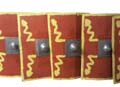
Now for the shields. Not satisfied with the usual suggestion that a plastic cup could be used as a central boss, we managed to make ours from a section of a plastic bottle mounted on a rectangular sheet of card which gave a more authentic look. A bit of research on historic paint colours and a search of the local DIY ‘match pots’ and our shields were ready for battle.

Some of the finished shields

Following a suggestion from one website we made a helmet from a cut down hard hat, which worked very well after a coat of PVA and the metallic paint effect.

We were so pleased with the end result that we are making a detailed instruction sheet with a pattern, instructions to follow and details of the paints and effects that we used to create our Roman armour which will be available soon.

The Romans in Westgate

A recruit to the Roman Army

Friday the 7th of December was Roman Day at St. Saviours C. of E. Junior School in Westgate. The Trust were invited to bring some Roman themed activities to the event, as well as Roman objects that the children could use to understand the everyday life of Roman people.

There was also an introduction to the army of Rome, which first conquered Britain in 43 AD and one young recruit was dressed in the full armour of a Legionary soldier and put through his paces as a new recruit to the Roman Army.

Armour and shields of the Roman soldiers

Organised into three legions, under standards bearing each Legion’s symbol, the Lion, the Eagle and the Tiger, the army of Westgatians marched in battle order around their school hall. The noise of their feet and cheering must have been heard in Rome.

A final battle saw two soldiers of each legion defend their standard bearer and legion’s standard with their shields from a ferocious bombardment with rubber balls.

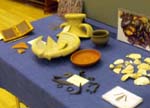
Roman objects on display

Surviving with their standards and honour intact the Legions retired from the field to a well-deserved lunch.

Later the demobbed Legionaries had a chance to see and handle a range of Roman artefacts representing the objects of everyday life and personal items, as well as the new building materials and construction methods the Romans brought to Britain.

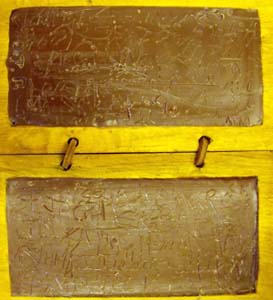
Everyone signed their initials in a wax tablet, just as the Romans of Westgate may have done two thousand years ago.

A Roman wax writing tablet
The initials of all the the children at the Roman Day written in the wax of a Roman writing tablet

Artistic Thanet

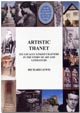
We now have stock of this interesting book by Richard Lewis on Thanet’s artistic heritage.

By the way, the Paypal button works properly now!

Artistic Thanet Book

With 36 pages in six chapters with 29 black and white illustrations, Artistic Thanet tells how the extraordinary lives of British artists including the painters Rossetti, Sickert and Van Gogh, the writers Wilkie Collins and John Buchan, and Frank Richards, the creator of Billy Bunter, were linked to the Isle of Thanet and sometimes to each other.


Buy Artistic Thanet with PayPal now for £4.50 + £1.13 P+P, Secure online payment, no PayPal account needed for card payment.


Artistic Thanet can also ordered by post using the order form link here: Artistic Thanet Order form

A new Chairman for the Trust

Chairman's handover
Outgoing and incoming Chairmen

Mr Chris Gibbs, who has been Chair of the Council of Trustees of the Trust for eight years, stepped down from the post at the Annual General Meeting which was held at Broadstairs on the 19th of November.  Mr. Simon Perry, who has been a member of the Council of Trustees for five years, was elected as Chair at the meeting. The Trustees and guests welcomed Simon as the new Chair and on handing over, a presentation was made to Chris and he was warmly thanked for his long service in the role.

Directors update
Directors update

The meeting heard reports from the officers and Emma Boast, the Director of the Trust, gave a round up of the year’s commercial and educational activities and thanked the many volunteers who have assisted in delivering another year of important research and education in Thanet’s archaeology.

Following the meeting, Deputy Director Ges Moody, gave a presentation on a future strategy for The Trust. A key proposal was to actively develop a role for archaeology in Thanet’s growing Heritage community.Practical steps to encouraging interest in Thanet’s archaeological heritage would be the production of a locally focused book series, building on the success of the Trust’s Underground Thanet publication. Renewed emphasis on connecting people with their heritage through engagement with the Trusts collection of artefacts, which would include hands on activities and workshops, would also be a significant element of the future strategy.
A useful discussion and informal exchange of ideas followed with the participants, who included representatives of the Isle of Thanet archaeological society, volunteers and other active members of Thanet’s archaeological community.

Thanet’s Historic Coast Displayed

Trust members were at Ramsgate Harbour for the day on Sunday October 28th October, taking part in the  Historic Coast at Ramsgate event, held for Kent’s Coastal Week. The weather proved to be surprisingly mild after the lashing wind and surprise hail storms of the day before.

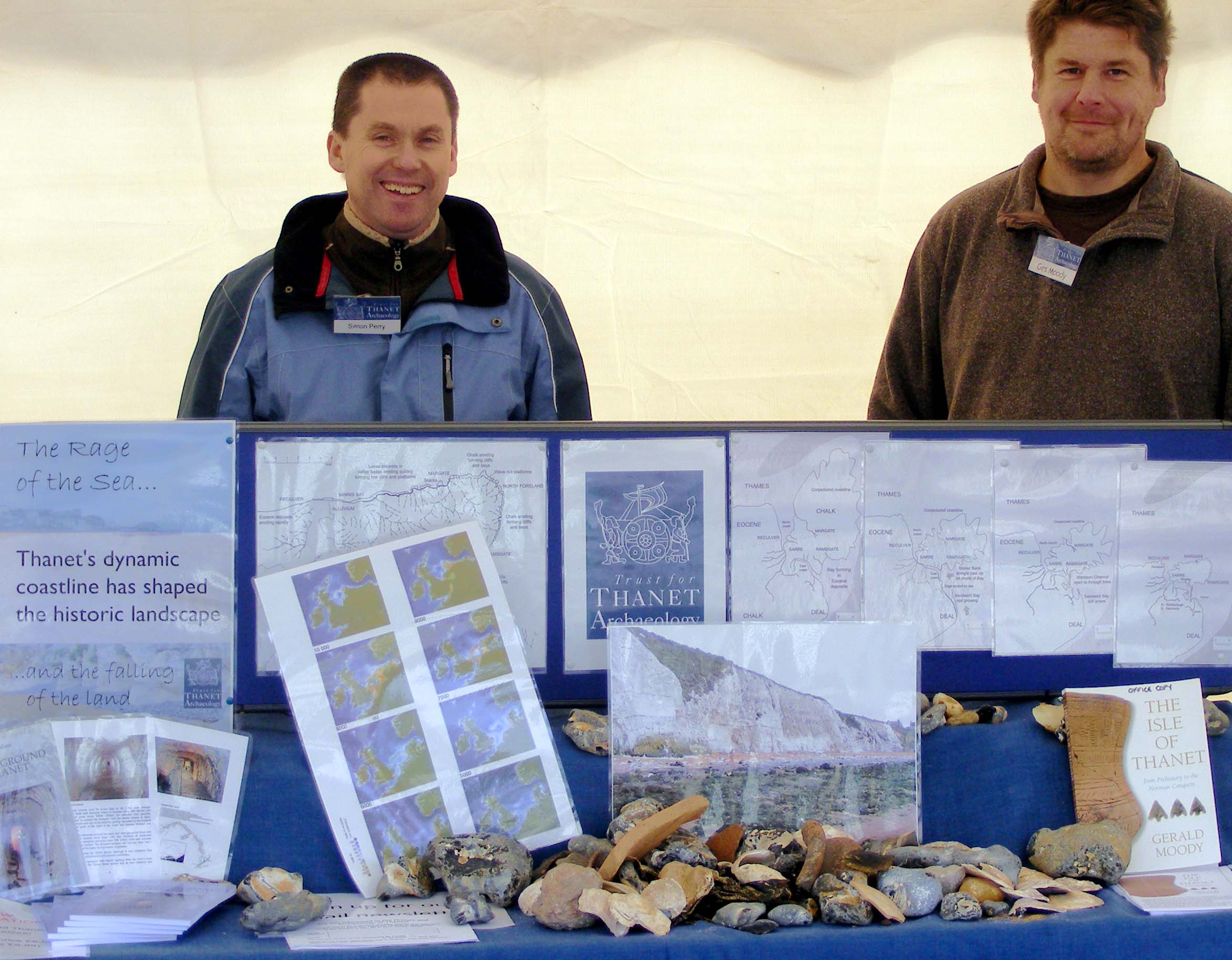
Picture of our stall at Historic Coast Ramsgate
The Trust’s stall at the Historic Coast Ramsgate Event

The Trust’s display focused on the dynamic coastal change which has altered the shape of the Isle of Thanet over the centuries.  Finds of pottery and flint were on show on our stall, collected from the beach under Dumpton Gap where a settlement dating from the Late Iron Age and Roman period erodes with every fall of the chalk cliffs.

Reconstruction plans showed the sequence of change of the east Kent coast from the Mesolithic period, which has removed so much of the land mass that once stood at the confluence of the  Thames valley and the English Channel, where Thanet now stands.

The immense changes to the regions coastline proved to be a talking point for the steady flow of visitors to the Trust’s stand and those of the other local historical groups who were there on the day. The day went well despite the cold wind that got up later in the afternoon. It was an opportunity to renew friendships and make new contacts.